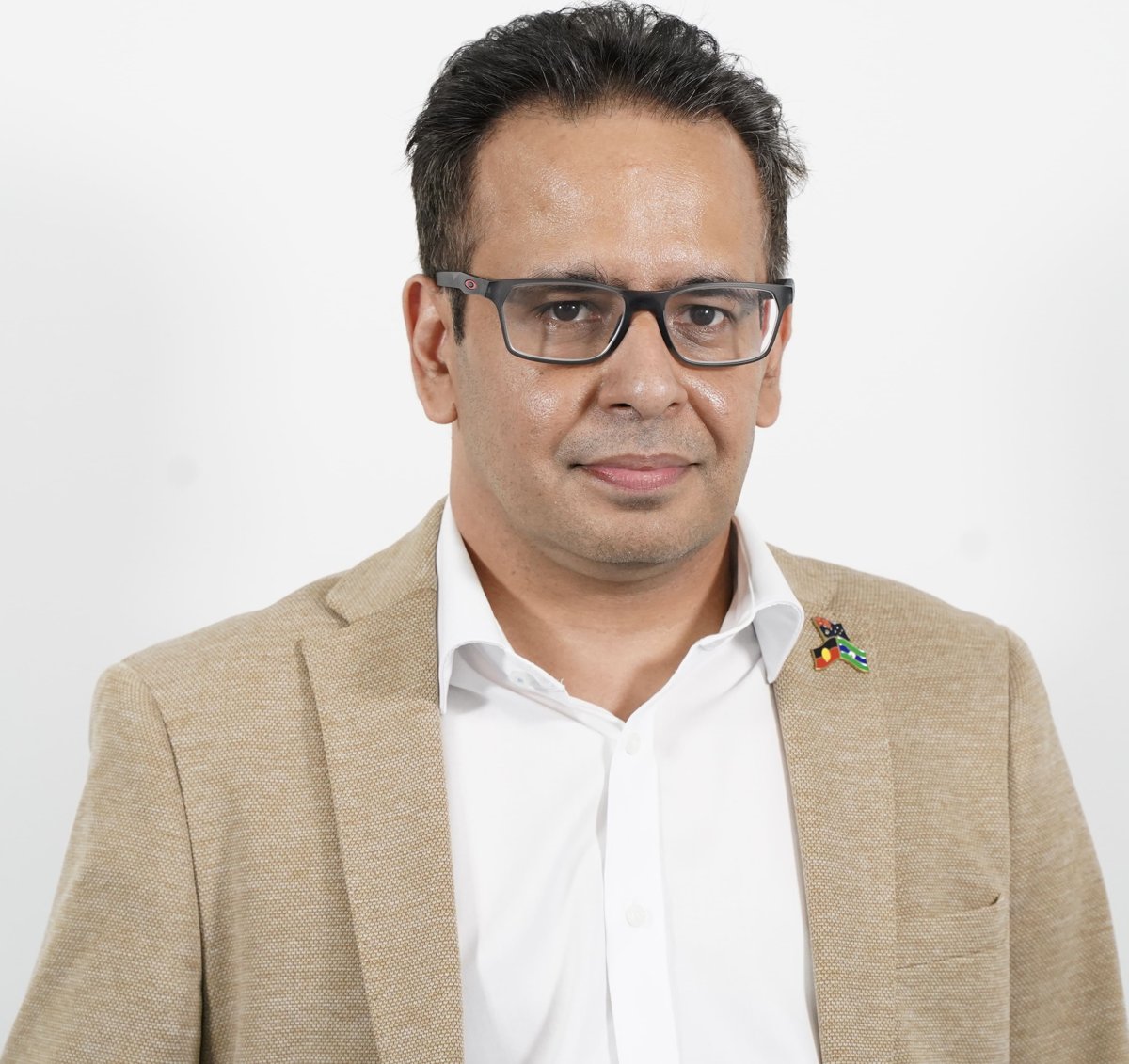
Professor Sidhu’s work has long asked a practical question: how do we make information useful without losing sight of the people it affects? His research in biomedical ontologies and health data helped give complex knowledge a structure that computers can use and humans can scrutinise.
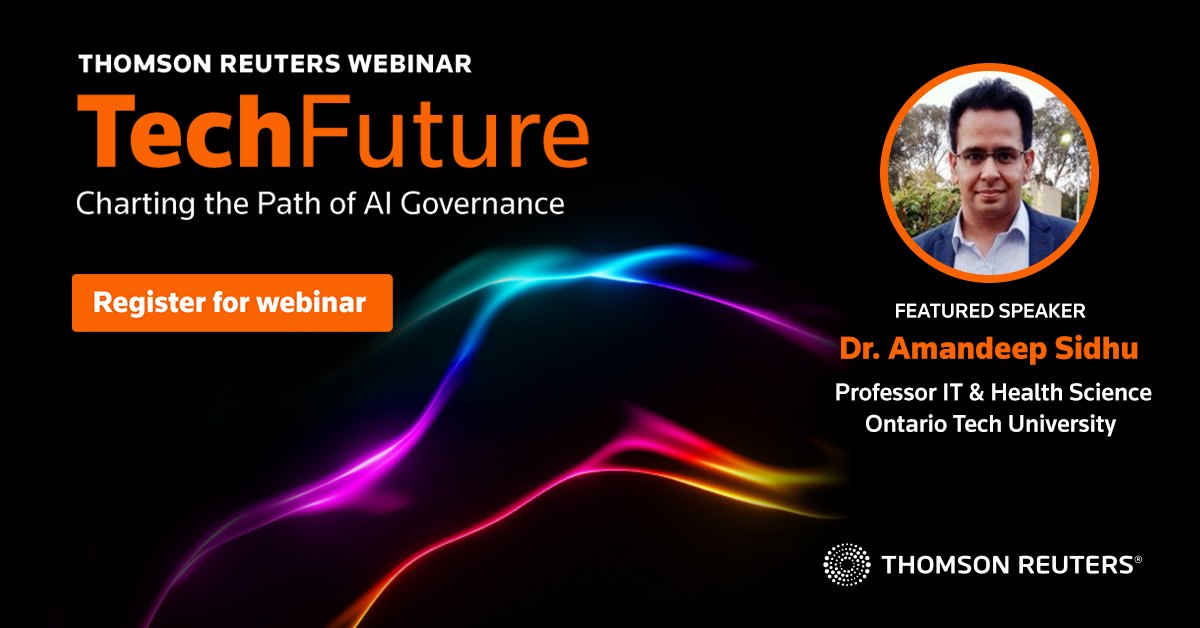
That same question now reaches into AI governance, skills and education. In a Thomson Reuters conversation with leaders from Microsoft, L’Oréal and the legal profession, he argued that decisions made by generative AI in education and healthcare must remain inspectable and overridable. Read the conversation
The work / 02
Three questions worth asking.
Where technology, learning and institutions meet.
01 / 03
Responsible AI & emerging tech
Who is accountable when technology moves faster than policy?
Advocating practical governance, data ethics and human oversight so innovation earns trust instead of assuming it.
02 / 03
Skills modernisation
How do we recognise what people can actually do?
Exploring clearer, more agile pathways for learning and professional growth, including competency frameworks such as SFIA.
03 / 03
Industry-sector collaboration
What changes when institutions build together?
Connecting academia, industry and government to make qualifications more relevant and careers more accessible.
SFIA is the Skills Framework for the Information Age. This section describes an editorial focus, not a claim of authorship or formal affiliation with SFIA.
Selected scholarship / 03
Ideas with roots.
Selected publications from his Google Scholar record, spanning biomedical knowledge, diagnosis and data integration. Citation rankings change; explore the live record for current figures.
Professor Sidhu is Editor-in-Chief of this Springer book series, which connects big data, semantic web technologies and cloud computing. Its books range from ontologies and data integration to privacy, security and large-scale computing — an extended conversation about how knowledge travels between systems and people.
“Irrespective of the sector, it [AI] is augmenting your job, your task; it is not ever replacing that.”
Professor Amandeep Sidhu · Thomson Reuters TechFuture, 2023
The human in the loop
Make decisions inspectable. Keep people able to intervene.
In the same discussion, Sidhu emphasised human oversight in education and healthcare and warned that even anonymised health data can remain sensitive. Responsible AI, in his account, is a continuing practice of checking bias, learning from mistakes and protecting the people represented in the data.
Press coverage from 2011 to 2014 — iTnews Australia and The Borneo Post — following his work in cloud-based genomics and biomedical research.
iTnews · September 2011
Sequencing the past in the cloud.
Long before cloud computing was routine in research, iTnews profiled his work at Curtin University: a six-month trial running DNA genome sequencing of extinct animal species on Microsoft Azure — data flowing in a hybrid cloud between Azure nodes in Singapore, on-campus high-performance computing clusters and a genome sequencer at Royal Perth Hospital. Analyses that had taken weeks on national compute facilities were finishing in hours, as the team worked through genomes including an extinct breed of Peruvian alpaca with no reference sequence to compare against.
“The hardest part is when you do not have a reference, you have no idea where you’re going… the closest we can come is the descendants of the species, its closest possible neighbour in the chain.”
“At an operational level, seconding [Sidhu] into our team provided a real researcher’s mindset to help build our capability… the link between what he does and his research peers gets a significant boost.”
The Borneo Post · July 2012
Boosting CSRI’s strength.
Under the headline “Leading researcher boosts CSRI’s strength”, The Borneo Post reported the appointment that brought him to Curtin Sarawak Research Institute in Miri — a fellowship that, the paper noted, “greatly enhanced” the institute’s research capabilities. It traced the groundwork behind the move: seven years leading the development of protein ontology, a standard since included in the National Centre for Biomedical Ontology’s repository at the United States National Institutes of Health alongside gene and other major biomedical ontologies, and a body of work in high-throughput computing, real-time data streams, semantic web and e-Health that had already produced more than 50 publications.
The article also connected the dots between his roles — executive committee member of the Asia Pacific Bioinformatics Network, contributor to the HPC+Cloud Facility for data-intensive science built with Curtin and Microsoft, and architect of the DNA Sequencing in the Cloud trial that linked Azure nodes in Singapore, clusters in Perth and a hospital genome sequencer. Read the Borneo Post article or the announcement from Curtin Sarawak.
The Borneo Post · May 2014
The ‘Jewel of India’.
“Dr Amandeep does Curtin Sarawak proud with Hind Rattan Award” ran the headline in May 2014, reporting that he was one of just 30 members of the worldwide Indian diaspora that year to receive the Hind Rattan — the ‘Jewel of India’, one of the highest Indian diaspora awards, granted annually by the NRI Welfare Society of India under the umbrella of the Government of India. The article noted his roles at CSRI, his senior lectureship in electrical and computer engineering, and his editorship of the Springer-Verlag Data, Semantics and Cloud Computing subseries alongside the International Journal of Semantic and Infrastructure Services.
“Dr Amandeep’s international profile in bioinformatics reflects well not only on his own research prowess but also on Curtin Sarawak’s research environment in which Dr Amandeep is an important part of our growing pool of research talent.”