Who steers the tertiary future?
A new national steward may coordinate long-term reform. Its credibility will depend on how independently it can do that work.

Australia’s tertiary system spans universities, vocational education, regional communities and a changing labour market. Coordinating them is a task that lasts longer than an election cycle.
A system seen from a student’s path
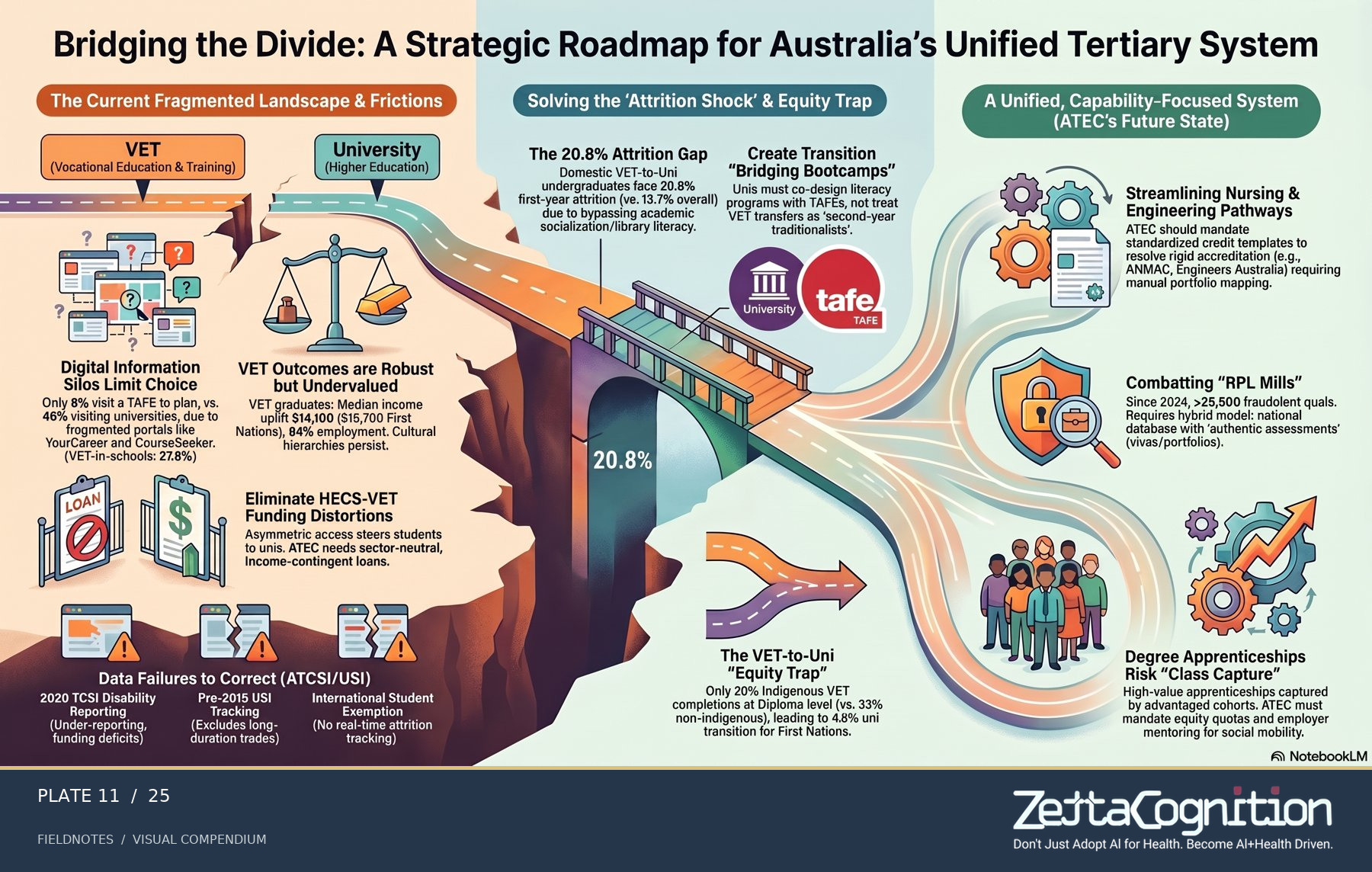
A learner may start in vocational education, work for several years and later seek a degree. From their perspective, these are chapters of one journey. From the system’s perspective, they may be separate funding streams, rules and credit decisions. A national steward has an opportunity to see across that divide.
Coordination can reveal where places are needed, where pathways break and where investment might have greater public value. Yet central visibility does not justify central control over every educational decision. Institutions serve different communities and should be able to explain their missions on their own terms.
The credibility of any new steward depends on whether its advice survives disagreement. If evidence and reasoning are public, difficult trade-offs can be debated. If priorities appear to change quietly with each political cycle, long-term planning becomes harder for students and providers alike.
Representation matters here. The people moving through tertiary education, including regional and vocational learners, should not be reduced to numbers in a forecast. Their experience can show where a policy that looks coherent on paper is difficult to live.
The tertiary roadmap shows how one learner’s path can cross institutions that rarely plan together. A national view is valuable only if it makes that path easier to travel.
Stewardship as an ongoing promise
A useful commission could track not only entry to study but movement between sectors, completion and the opportunities that follow. It could ask whether credit is recognised consistently and whether underserved communities see real options, not simply new targets.
Independence should be matched by accountability: clear scope, published methods and a way to correct course when the evidence changes. Coordination becomes trustworthy when others can inspect how decisions were made.
The goal is not an immaculate diagram of the tertiary system. It is a system whose doors connect, whose promises are understandable and whose direction remains grounded in public purpose beyond a single budget or election.
The planning loop below makes stewardship concrete: shared goals, funding, connected pathways and public review. None of those steps should erase local missions or student voices.
Stewarding the tertiary system
- 1Plan
Set shared national goals.
- 2Fund
Tie funding to those goals.
- 3Connect
Link TAFE and university.
- 4Review
Adjust as needs change.
Stewardship is not control
A national commission can bring evidence to funding, participation and skills planning. But a system that sees institutions only as levers for short-term priorities risks losing the trust required for durable reform.
Clear decision rights, public reasoning and room for institutional missions can make coordination more credible. Independence must be visible in practice, not just promised in a charter.
Bridge the divide
Students do not experience their futures in neat sectors. Credit transfer and recognition of prior learning should allow vocational and university pathways to meet without treating either as second best.
The measure of a steward is whether more people can find a route through the system—and whether the system keeps its promises along the way.
The blueprint gives the structure a human test. Where does a vocational learner carry credit forward, and where do the lines on a chart still break?
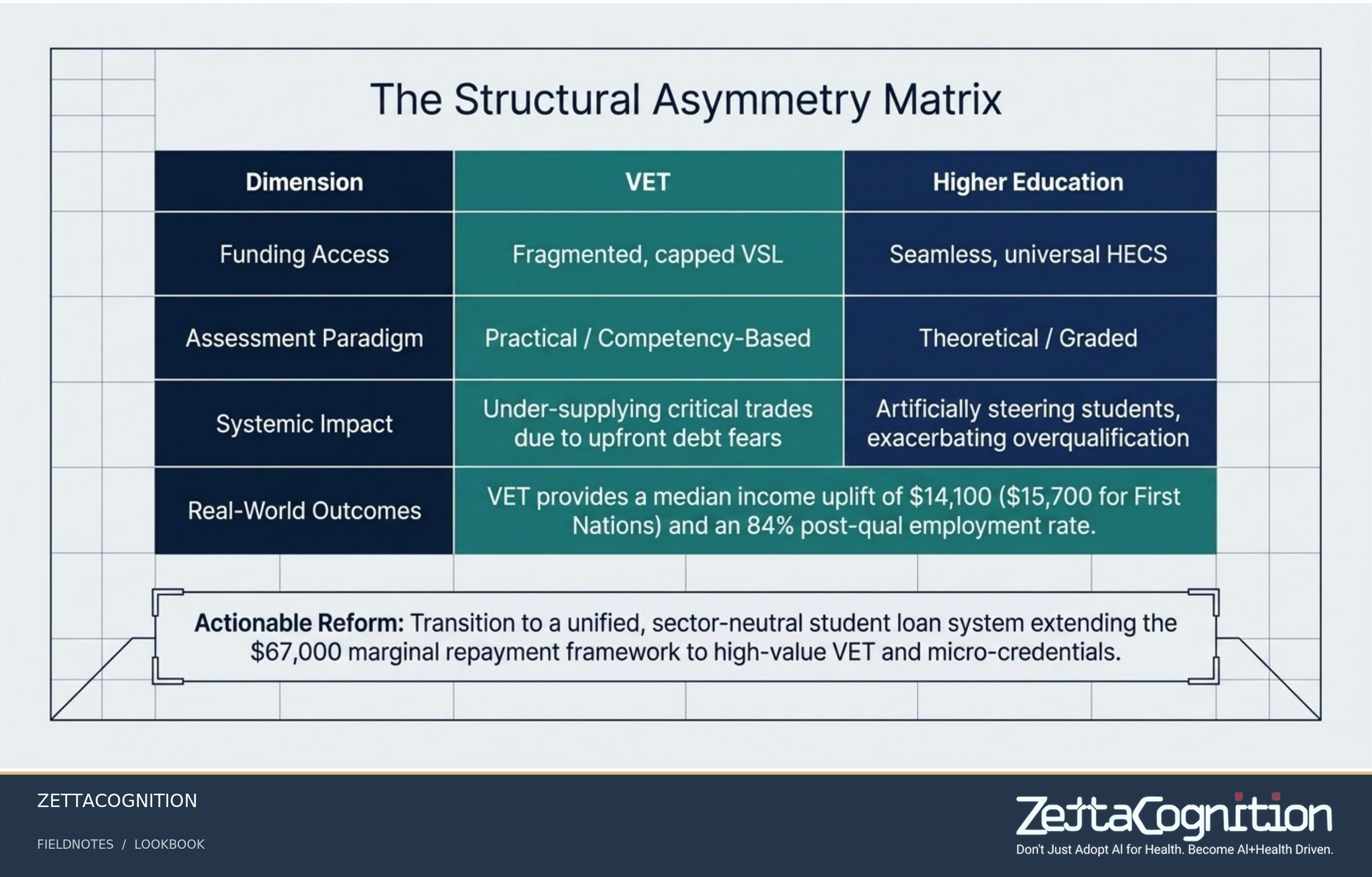
A connected tertiary system is not measured by how tidy its chart looks. It is measured by the doors a learner can actually pass through.
Cite this story
Sidhu, A. S. (2026). Who steers the tertiary future?. Fieldnotes: AI Research Journal, 1(1). https://doi.org/10.5281/zenodo.23327293