A university beyond the AI sandbox
Small pilots create momentum. Without shared foundations, they can also create twenty incompatible versions of the future.

An AI experiment in one faculty may be useful. A dozen experiments with different data practices, suppliers and access rules can become an institutional problem.
The pilot that becomes a system
Imagine a lecturer finding a useful AI tool for a small class. Students respond well, a colleague asks to try it and a faculty considers rolling it out. Suddenly questions that barely surfaced in the pilot become urgent: where do student submissions go, who can access them and what happens when the supplier changes its terms?
A sandbox makes experimentation possible by keeping the stakes contained. It cannot be the final operating model for an institution that wants reliable access across disciplines. Scale exposes the seams between procurement, teaching, support and records that a local success can conceal.
A shared foundation could define the questions every project must answer before it touches institutional data. It could include accessibility checks, retention limits, contracts, staff support and a process for evaluating educational benefit. These are enabling conditions, not a demand for identical lessons.
Faculty should still be free to articulate different needs. A language tutor and a clinical simulation work with different materials and risks. Good governance gives each a way to make its case while keeping common duties intact.
The governance comparison invites a more useful question than ‘Which pilot worked?’: which responsibilities remain when a small experiment becomes an everyday institutional service? The pictured models are illustrative, not a compliance guide.
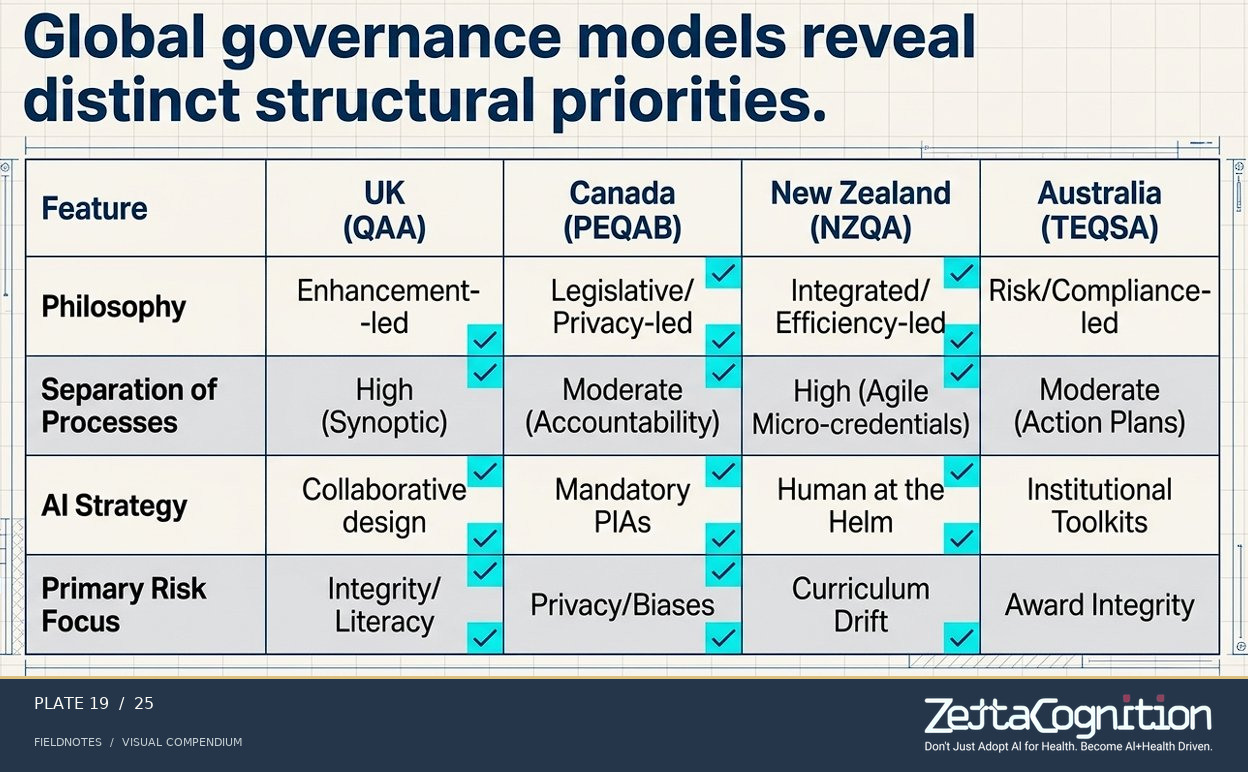
What happens after the demonstration
A promising pilot deserves more than applause and a slide deck. Its users need a route to report limitations, its costs need to be understood beyond an introductory licence and students need an alternative if the tool is inaccessible or inappropriate for them.
Institutions should also know when to stop. Some experiments will not justify the effort of maintenance or the risk of data exposure. Calling that outcome a useful finding is a sign of maturity, not failure.
The question is whether a useful idea can become dependable everyday practice while remaining accountable to the people it affects. That is a harder achievement than collecting impressive pilots, and a more valuable one.
The sequence below starts with experimentation but does not stop there. Evaluation, ownership and support are what let a promising idea become a dependable service.
From AI pilot to whole institution
- 1Sandbox
Try tools with a small group.
- 2Evaluate
Measure benefit and risk.
- 3Govern
Set policy and ownership.
- 4Scale
Roll out with support.
The seams matter
Learning platforms, student records and simulation tools rarely fit together by accident. When each team buys independently, leaders struggle to know where information goes and who is responsible when something fails.
A shared framework can set expectations for consent, procurement, accessibility, retention and evaluation while leaving room for disciplines to build differently.
Centralise responsibility, not imagination
A common data and governance layer need not mean a single generic teaching experience. It can provide safer foundations on which a nursing simulation and a language tutor each serve their own purpose.
The real measure of maturity is not the number of pilots. It is whether useful ideas can move into everyday practice without multiplying risks or excluding students.
The institutional architecture slide puts the seams back in view—data, tools, people and decision rights. A successful demo cannot answer for the connections it has never had to make.
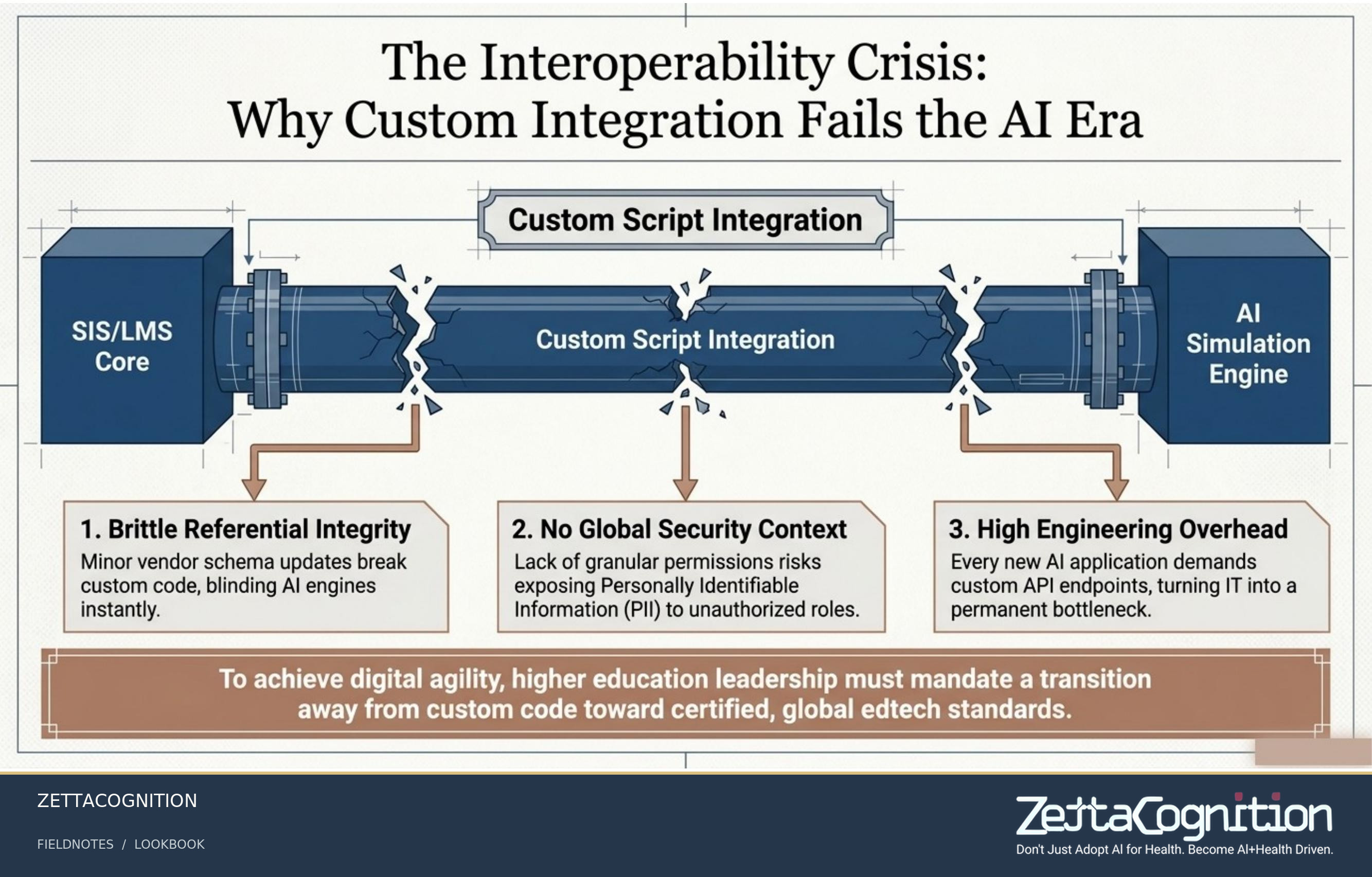
The point of an AI pilot is not to collect pilots. It is to learn which ideas deserve to become safe, ordinary practice.
Cite this story
Sidhu, A. S. (2026). A university beyond the AI sandbox. Fieldnotes: AI Research Journal, 1(2). https://doi.org/10.5281/zenodo.23330278