After the AI detector
The future of academic integrity may depend less on guessing who wrote a sentence and more on seeing how learning happened.

A final essay is a narrow window into a student’s thinking. As writing tools become more capable, judging the learning behind that finished page gets harder.
What a student can actually show
Imagine a student called into a meeting because a submission has been flagged. The student has notes, earlier drafts and a record of the sources they weighed, but the conversation begins with a percentage on a screen. Even if the concern is resolved, suspicion has already displaced the educational question: what did this person understand and produce?
A more constructive assessment creates occasions to reveal thinking as the work unfolds. A proposal, an annotated revision and a short conversation about a difficult choice are not foolproof tests of authorship. They are better evidence of learning than a tool that claims to infer a writing process from finished prose.
The point is not to ask students to narrate every minute of their work. Excessive tracking can make learning feel like surveillance and can expose private habits or sensitive information. Institutions should gather the smallest useful record and explain what it is for.
Students also need to know what kinds of assistance are permitted. The difference between using a tool to clarify a concept, to edit language and to generate the argument cannot be left to guesswork at the moment an allegation is made.
The Compendium plate reframes the dispute. Instead of asking a machine to guess the author of a finished sentence, ask what evidence of thinking was available along the way.
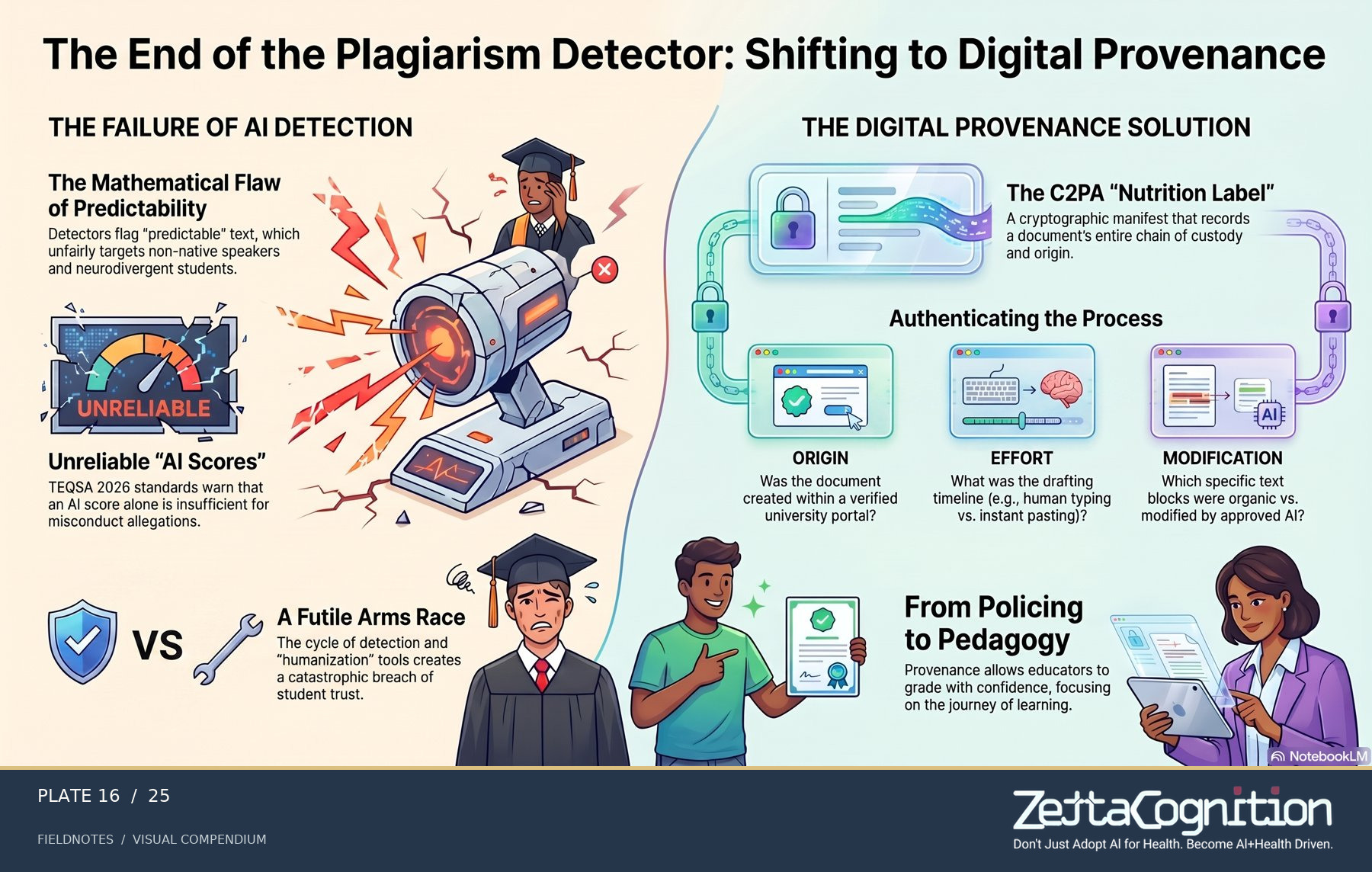
From suspicion to a defensible process
Educators still need a way to address genuine misconduct. That process should allow a student to respond to specific evidence, receive a fair explanation and be assessed against published expectations. An automated indicator might prompt a question, but it cannot carry the burden of proof by itself.
Better assessment design also makes feedback more useful. If an educator sees how an argument changed between drafts, they can respond to the student’s decisions rather than only marking the final surface. Integrity and learning stop being separate administrative projects.
The next chapter of academic integrity may be less about catching an invisible author and more about creating visible opportunities for students to demonstrate ownership of their ideas.
The contrast below is not permission to ignore misconduct. It is a reminder that a suspicious score is a question, while a fair process needs explanations, context and a chance to respond.
Beyond the plagiarism detector
A score is not an explanation
An AI-detection score is a probabilistic signal, not proof of misconduct. Treating it as a verdict risks turning ordinary writing patterns into grounds for suspicion.
That risk is not evenly distributed. A student writing in a second language or following a strict template may be especially vulnerable to false inferences.
Look at the work in progress
Draft histories, annotated decisions, short oral defences and staged feedback can make a learner’s reasoning visible without reducing assessment to surveillance. Evidence gathered during the process is often more educationally useful than a label assigned at the end.
Any provenance system should minimise data collection and give students a fair way to explain their work. The goal is confidence in learning, not a permanent record of every keystroke.
The Lookbook slide follows that shift from detection toward provenance. Good evidence should help students show their work without demanding a permanent record of every keystroke.
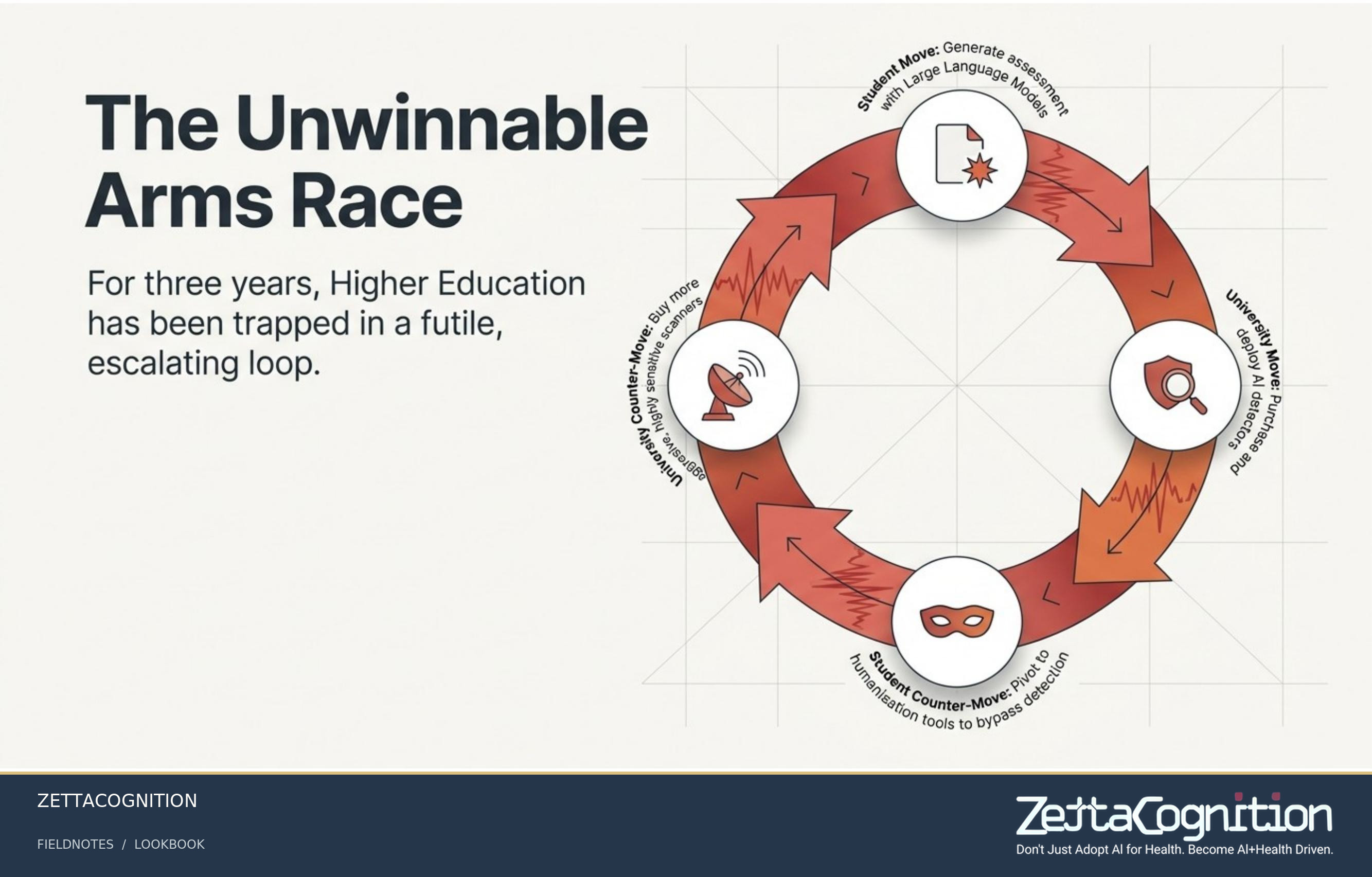
If the first question we ask a student is ‘What did the detector say?’, we may have forgotten to ask what they learned.
Cite this story
Sidhu, A. S. (2026). After the AI detector. Fieldnotes: AI Research Journal, 1(3). https://doi.org/10.5281/zenodo.23330715