Credit for what you already know
The route from vocational learning to university should not require people to prove the same capability twice.

Education systems often divide experience by the institution that certified it. For a learner, the knowledge itself does not arrive with a sector boundary attached.
The work behind an application
Someone who has completed vocational training and years of relevant work may approach a university expecting their experience to count. Instead they can find themselves translating every unit, collecting old documents and waiting months for a decision. The paperwork can feel like a second test of knowledge already demonstrated elsewhere.
Recognition is not automatic equivalence. A course may require depth or theoretical foundations that a previous qualification did not assess. But an honest comparison should name those differences, examine the evidence and avoid treating the name of the issuing institution as the answer.
A portfolio, mapped learning outcomes and professional experience can help an assessor see what a person knows. Digital tools may organise potential matches, but someone with disciplinary expertise must still judge their relevance and standard.
Timing changes the practical value of credit. A decision made after enrolment or after a fee deadline can leave the learner paying for a subject they may not need. Predictable timeframes are part of fairness, not an administrative luxury.
The tertiary roadmap shows routes between vocational education, university and work. It raises a practical question: can a person carry recognised learning across the bridge rather than starting over?
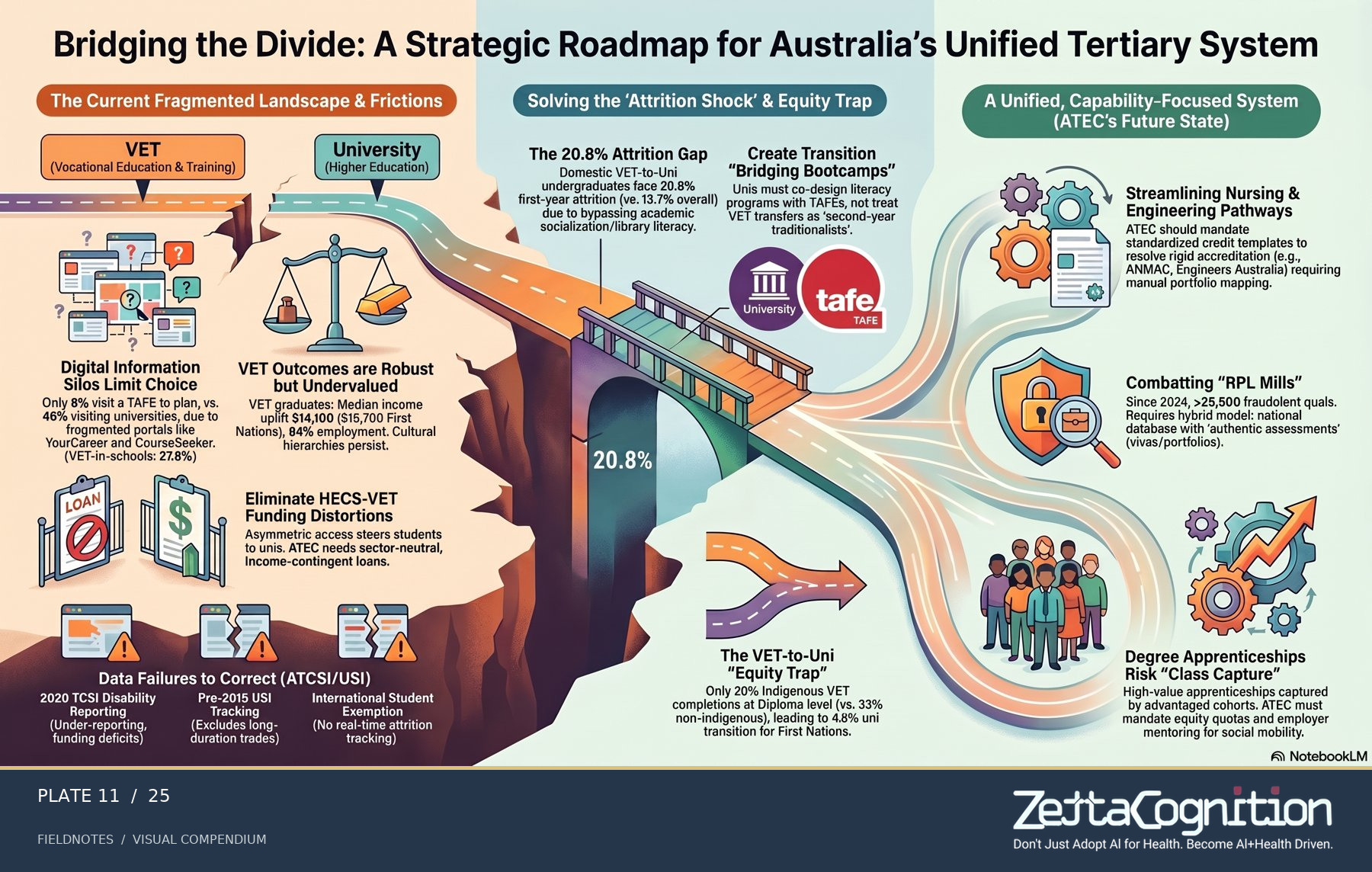
A bridge with visible rules
Students should be able to see what was accepted, what was not and why. A review or appeal route matters when the evidence has been misunderstood. Clear reasoning also helps institutions improve recurring pathways rather than repeating the same case from scratch.
Cooperation between vocational and university providers can turn one-off decisions into reliable maps while preserving room for individual circumstances. This saves students time without asking academic standards to disappear.
A connected tertiary system is measured in journeys people can complete. Respecting prior learning means allowing a person’s past effort to become a foundation for the next step, not a reason to repeat the first one.
The steps below do not promise automatic equivalence. They ask institutions to compare evidence fairly, explain the judgement and record credit people can actually use.
How prior learning becomes credit
- 1Gather
Collect evidence of skills.
- 2Compare
Match to course outcomes.
- 3Judge
Experts assess depth.
- 4Credit
Award and record it.
Translate the learning
Recognition of prior learning should compare actual outcomes and evidence, not merely titles of units. Clear maps between competencies and degree requirements help both educators and students understand what has been accepted.
Automated matching may help find candidates for review, but it should not replace expert judgement about depth, context and professional standards.
Make decisions legible
A rejected credit application needs a reason and a route to appeal. Slow or opaque processes cost students time, money and confidence in the promise of a connected tertiary system.
A useful bridge is one people can actually cross, with standards intact and prior effort respected.
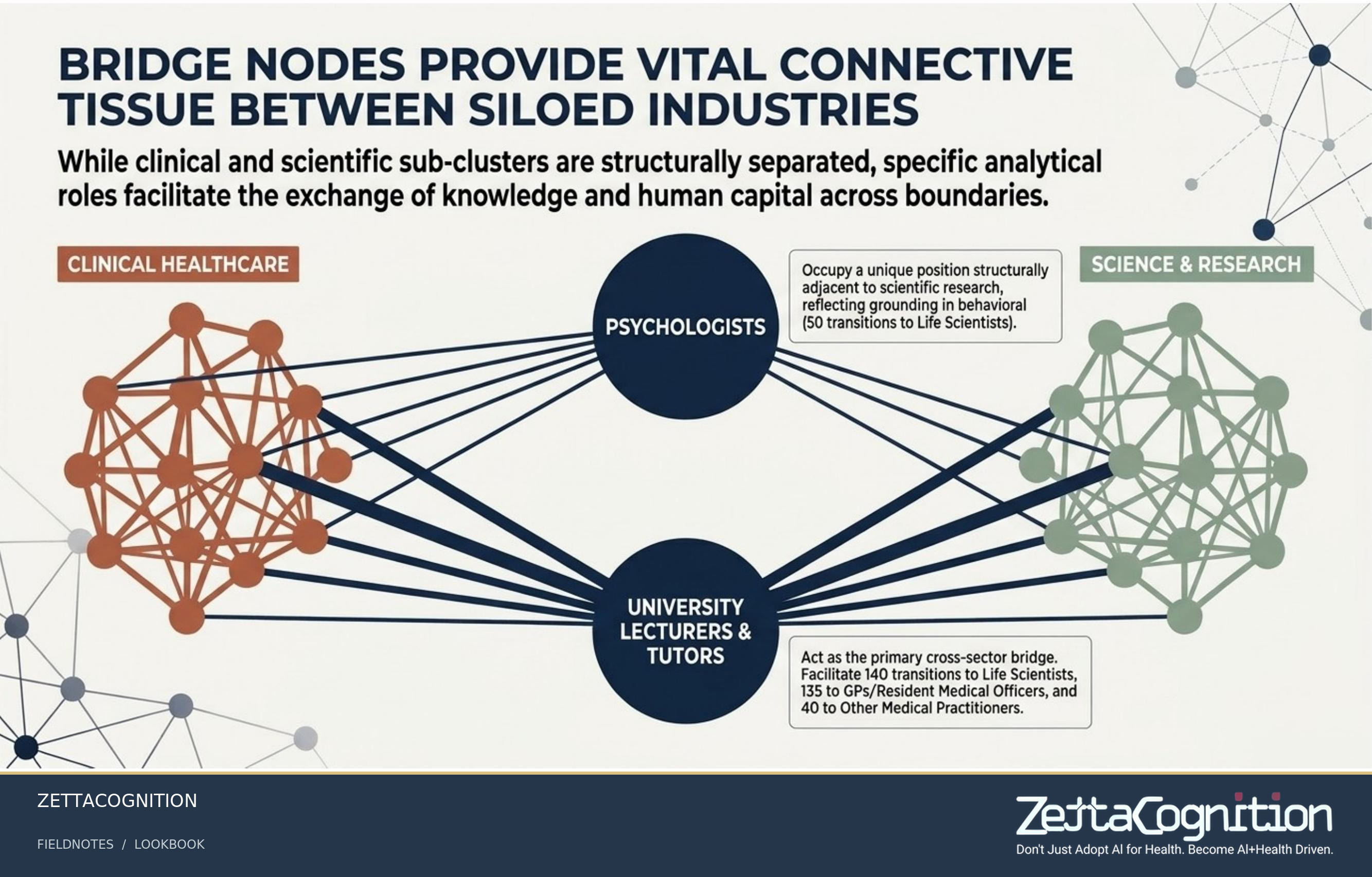
The mobility diagram shows bridges that connect education and employment. It is a strategic illustration, not proof of a credit arrangement: recognition works only when standards stay clear and previous effort remains visible.
The question is not whether every prior experience deserves credit. It is whether we can explain, fairly and promptly, what does.
Cite this story
Sidhu, A. S. (2026). Credit for what you already know. Fieldnotes: AI Research Journal, 1(1). https://doi.org/10.5281/zenodo.23309630