Regional students need more than a place
A place at university can be transformative. Moving for it can also bring financial and social costs a funding formula misses.

Widening access for regional students is a worthy ambition, but enrolment figures alone cannot show whether opportunity lasted past the first semester.
The distance after acceptance
A regional student may open an offer letter at home and see a possibility that once felt remote. Accepting it can also mean finding somewhere to live, leaving paid work or arranging care for someone else. The journey to study begins long before the first lecture.
For some students, moving is the right choice; for others, flexible local study is the only realistic option. Policy should not assume that opportunity always looks like relocation to a city. The relevant question is whether the route gives a learner a genuine chance to participate and finish.
Once classes begin, belonging can be as consequential as entry. A student who cannot join informal networks may miss the advice and confidence peers receive without noticing. Mentoring and local hubs can help, but they should be shaped by students’ own accounts of what they need.
Financial support should reflect the rhythm of study, not only the first enrolment. Travel, placement requirements and changing household circumstances can make a later semester harder than the first. A single welcome package cannot carry the whole journey.
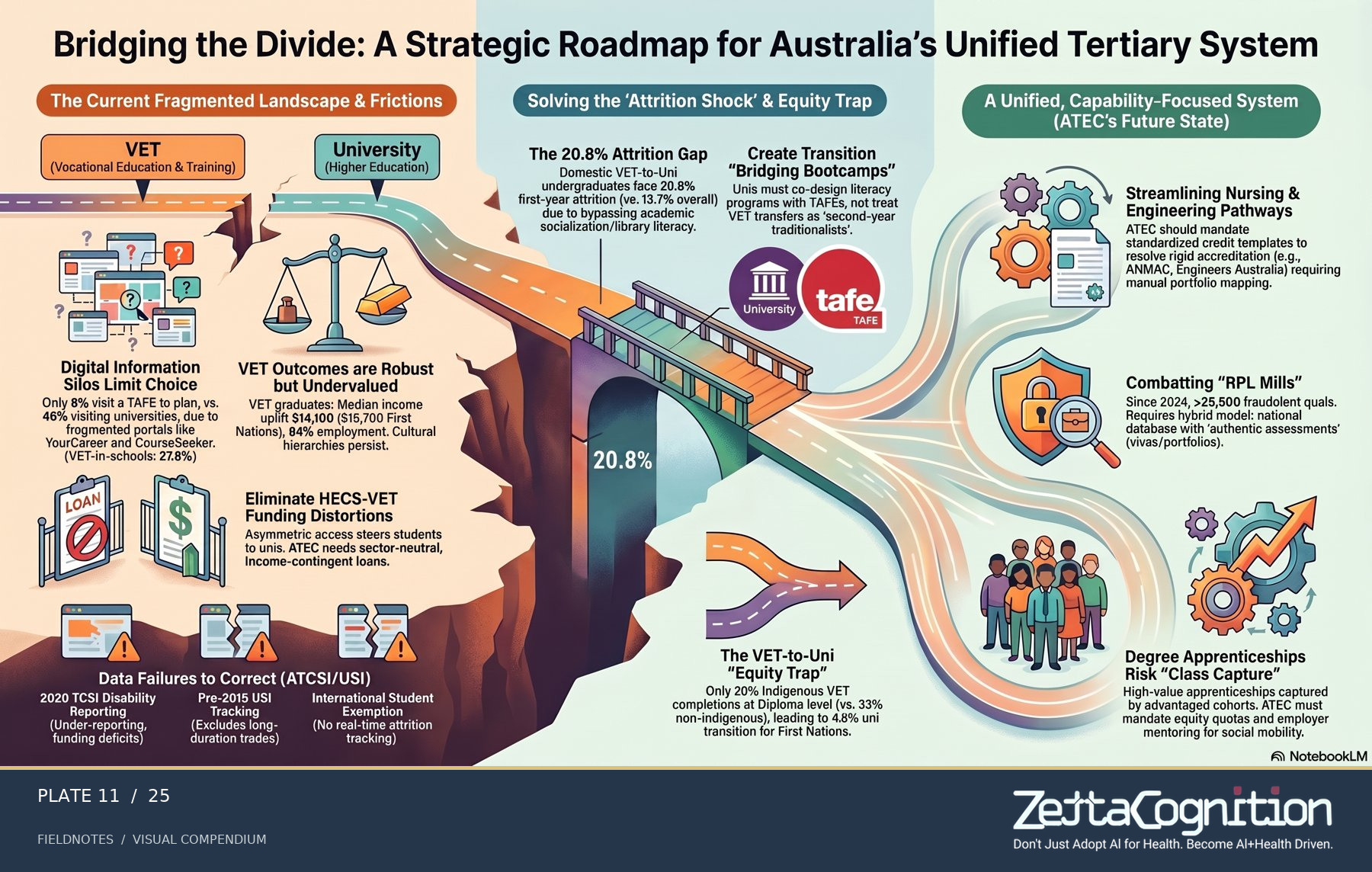
The Compendium’s tertiary roadmap follows a learner from vocational education toward university, with the breaks in support and recognition visible along the way. It illustrates a system-wide proposal, not measured outcomes for regional students. For someone who must also negotiate travel, housing and distance from familiar support, each break can make an offer harder to turn into an opportunity.
What success looks like from home
Completion matters, but so does what becomes possible afterward. Some graduates will stay near their communities, others will move, and both choices can be valuable. A strong system should not define regional success only by the number of people it draws away.
Institutions can learn by following persistence, listening to students who pause or leave and working with regional employers and communities. The story behind a withdrawal is often more useful than the count alone.
An offer is a meaningful beginning. The promise of access is fulfilled only when students have the support, flexibility and recognition to make something lasting from it.
The comparison below makes the gap plain. An offer and an opportunity are not the same thing when the conditions to take up that offer are missing.
What regional students need
Follow the student
Support should reflect the pressures students actually face: housing, travel, isolation, caring responsibilities and the loss of familiar networks. These do not disappear when someone enrols at a metropolitan campus.
Peer mentoring and local student hubs can ease the transition, while flexible study can let some learners stay close to their communities.
Measure persistence, not only entry
An access policy succeeds when students can continue, complete and choose what comes next. Institutions need to listen to those who leave as carefully as those who graduate.
Equity becomes meaningful when the system invests in the entire journey, not just the invitation to begin.
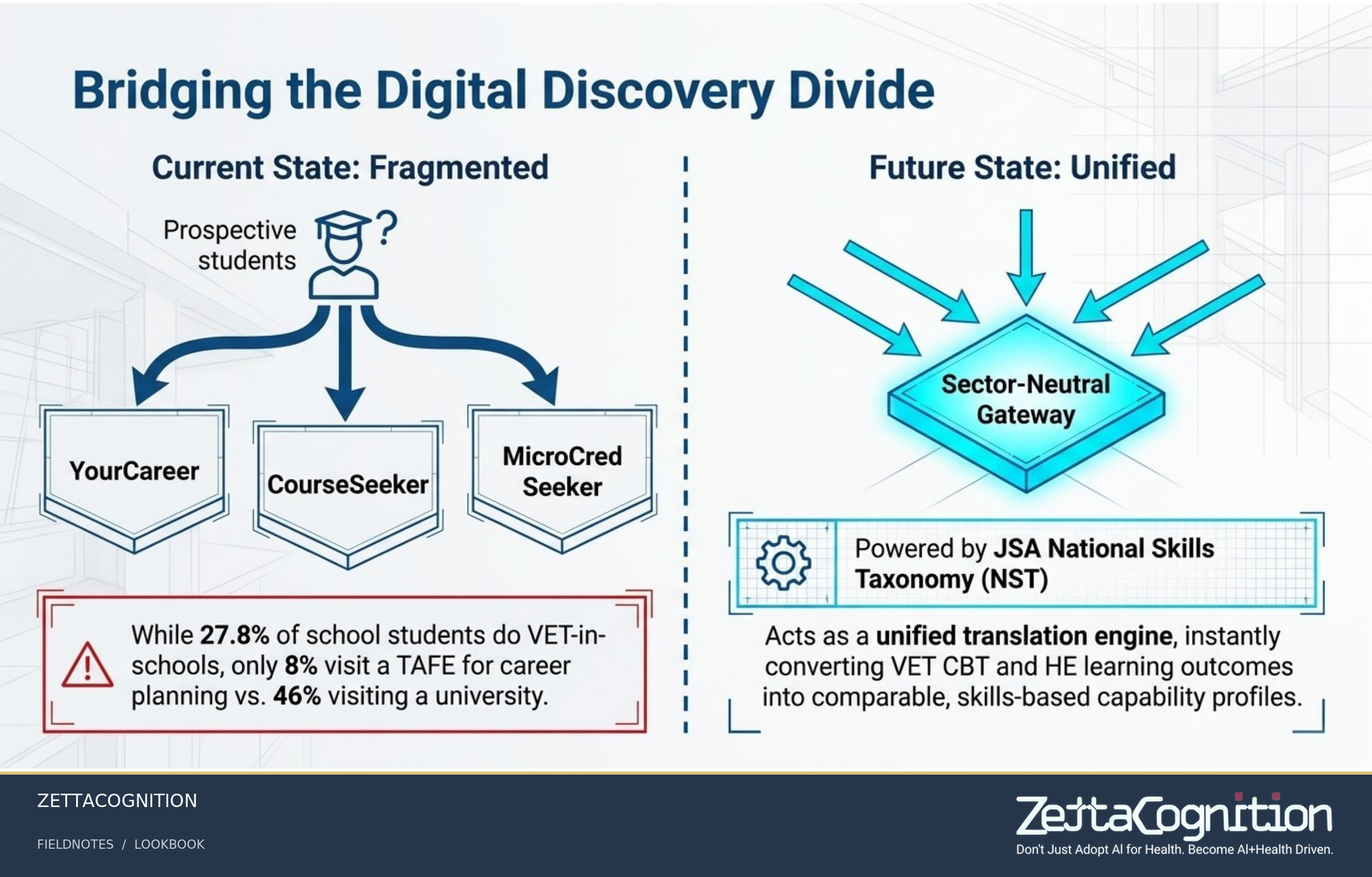
The digital-discovery diagram maps a proposed way to connect fragmented tertiary routes. It is not a map of regional provision: for a student studying far from campus, even the clearest pathway still depends on reliable connection, practical guidance and a place to belong.
A place at university is an invitation. The real promise is to make it possible for a student to stay, learn and choose what comes next.
Cite this story
Sidhu, A. S. (2026). Regional students need more than a place. Fieldnotes: AI Research Journal, 1(1). https://doi.org/10.5281/zenodo.23309248