The AI university needs a human purpose
A campus full of AI tools is not automatically a better place to learn.

The most consequential question for a university is not which model to buy. It is what kind of learning its students should be able to demonstrate in a world where models are everywhere.
The question before the purchase
A student asks an AI assistant to explain a difficult concept. The answer is fluent and immediate, and perhaps wrong in a way that is difficult to spot. The educational question is not just whether the institution permits the tool. It is whether the student knows how to test the explanation against evidence and their own developing understanding.
Universities can teach that judgement directly. A class might compare competing outputs, trace a claim to its source or explain why a useful answer still misses disciplinary context. These activities treat AI as part of the intellectual environment rather than an invisible shortcut or a forbidden object.
Faculty cannot redesign this work on top of every other responsibility without support. Time, examples and opportunities to evaluate teaching changes are as important as licences. Otherwise adoption becomes uneven, with students receiving different rules in neighbouring classrooms.
Access is also part of the design. A course that assumes paid tools, fast connections or unrestricted data sharing may quietly privilege some students while asking others to improvise. An institution’s choices determine whether new capability widens or narrows participation.
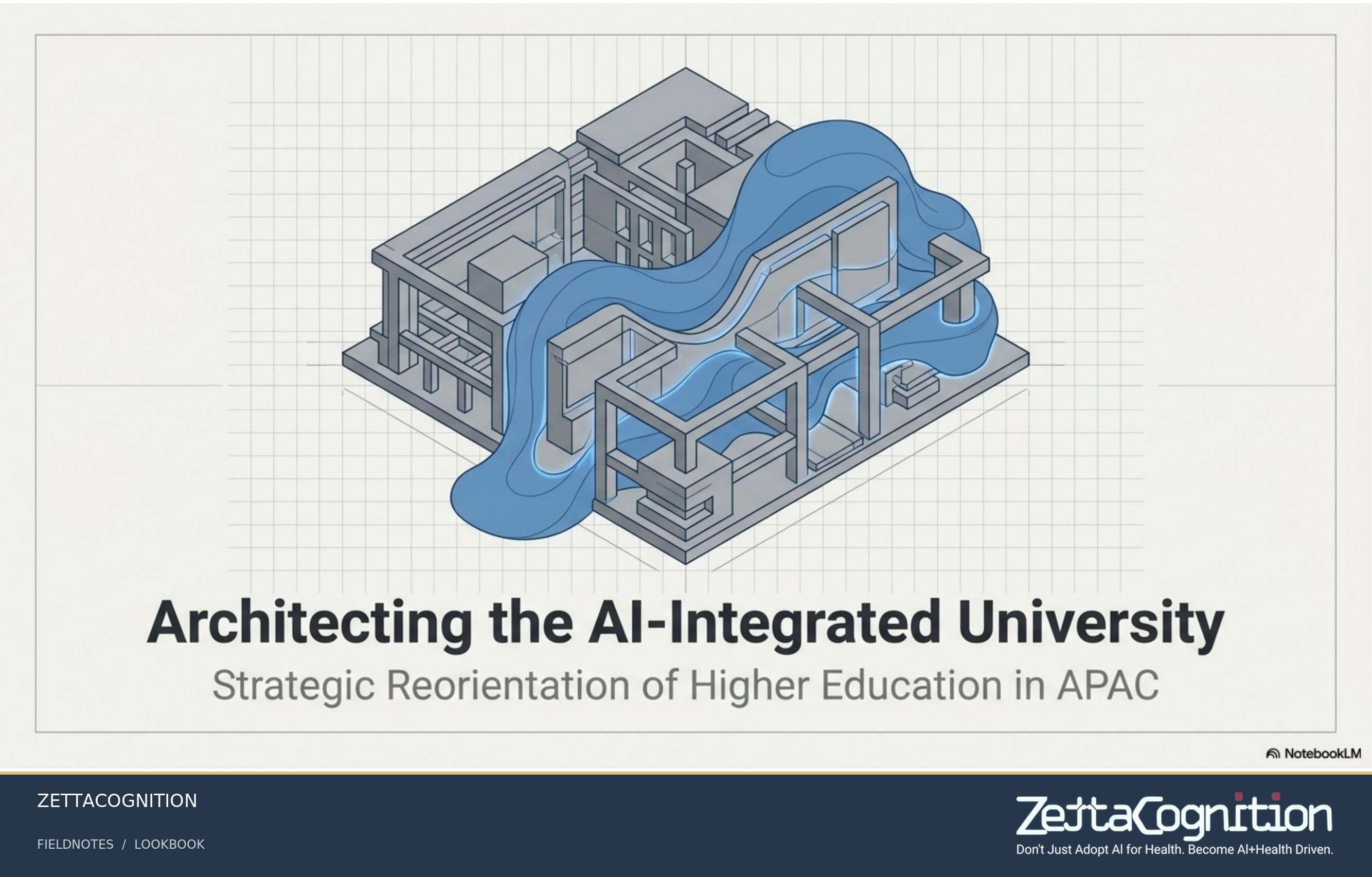
The opening slide frames AI as an institutional choice, not a shopping list. Start with the human capability the university exists to develop, then ask whether a tool serves it.
A mission that can say no
Shared boundaries for privacy, assessment and accessibility give educators space to experiment responsibly. They also make it possible to decline a tool when its cost or data practices undermine the learning it promises to improve.
The measure of progress is not the number of AI products in a campus inventory. It is whether students leave better able to inquire, collaborate, create and recognise the limits of both human and machine claims.
A university needs technology in its story, but it should not let technology write the ending. Human purpose is the standard against which every new system must earn its place.
The order below is the argument in miniature: purpose before product. Moving straight to the final step risks mistaking adoption for education.
Putting purpose before tools
- 1Purpose
Why do we exist?
- 2People
Who do we serve?
- 3Practice
What should change?
- 4Tools
Which AI helps that?
Teach judgement explicitly
Students need to question an output, test a claim and recognise where a tool lacks context. These are not optional extras around technical fluency; they are part of it.
Faculty need time and support to redesign tasks around such abilities. Uneven access to tools otherwise turns an innovation into another source of inequity.
Set institutional boundaries
Shared expectations for data, assessment and accessibility let teachers experiment without making each classroom a separate policy regime. Students should be able to understand what is permitted and what evidence of learning matters.
A university should adopt technology in service of its educational mission, rather than quietly redefining that mission around what technology can do.
The later Lookbook slide returns to learners. Its promise should be tested in the work students can question, explain and carry beyond a screen.
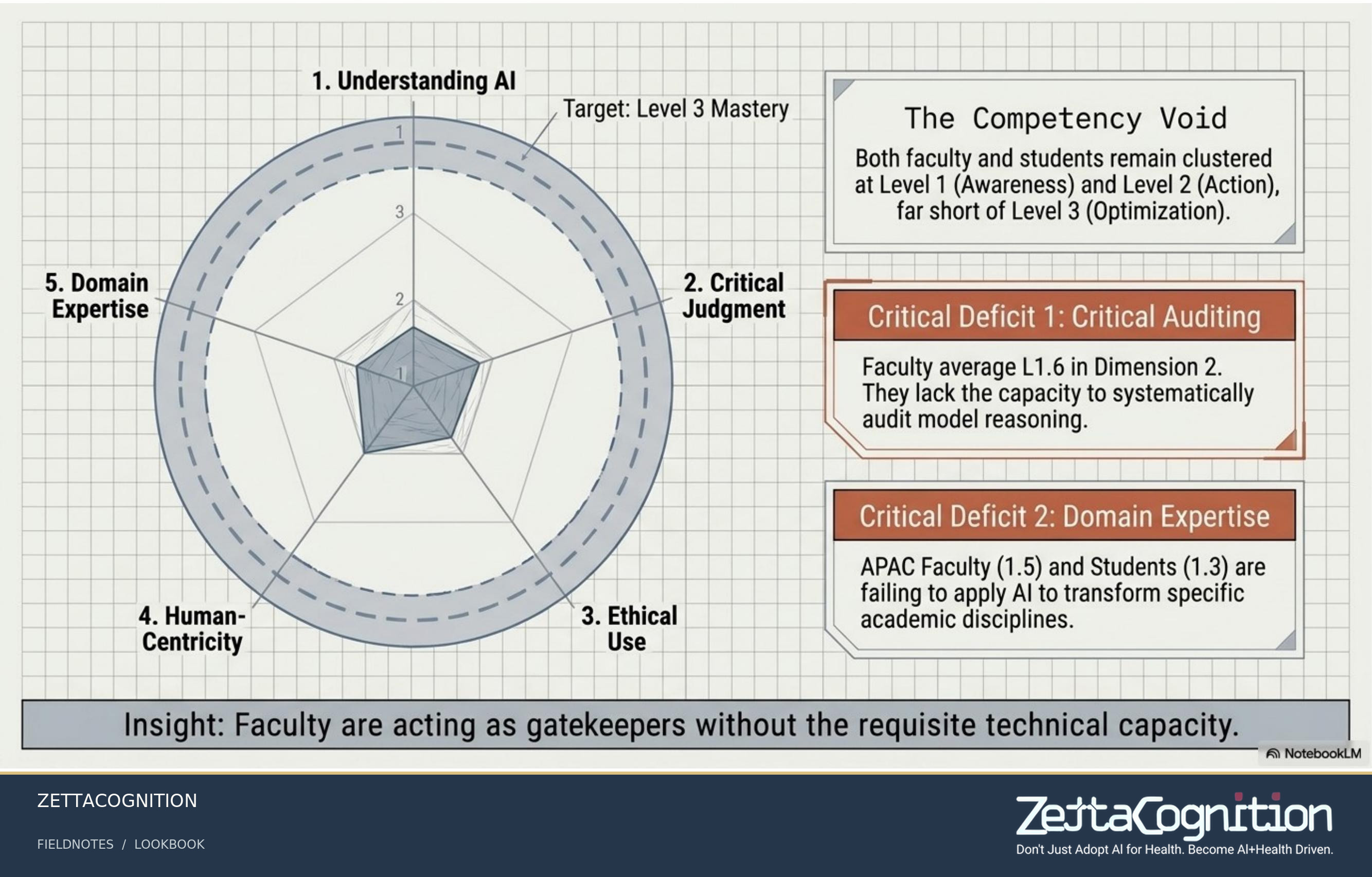
A university can use AI everywhere and still fail to teach judgement. Its mission, not its inventory, should tell us whether it succeeded.
Cite this story
Sidhu, A. S. (2026). The AI university needs a human purpose. Fieldnotes: AI Research Journal, 1(1). https://doi.org/10.5281/zenodo.23316063