The cloud choice is a governance choice
Selecting an AI platform also selects assumptions about data control, portability and who can change the terms later.

Cloud strategy is often reduced to performance and price. As organisations move from chat experiments to systems that take action, the long-term questions become harder to postpone.
The contract beyond the demo
A team may choose a cloud platform after a persuasive demonstration: fast responses, convenient integrations and an attractive starting price. Months later, a different question arrives. Can a workflow move to another model without being rewritten? Can the organisation explain where its data went and what the supplier retained?
Those questions are governance choices made early, whether or not a procurement meeting names them as such. Proprietary interfaces can make departure expensive. Unclear data terms can leave sensitive records entangled with services that were introduced as temporary experiments.
Portability does not require pretending every provider is interchangeable. It requires identifying the parts of a system that should remain under institutional control: records, permissions, logs and the ability to replace a model when the case for doing so changes.
As tools move from answering questions to taking actions, authority must be narrower than capability. A system that can send a message or modify a record needs explicit boundaries, approval points and evidence of what it did.
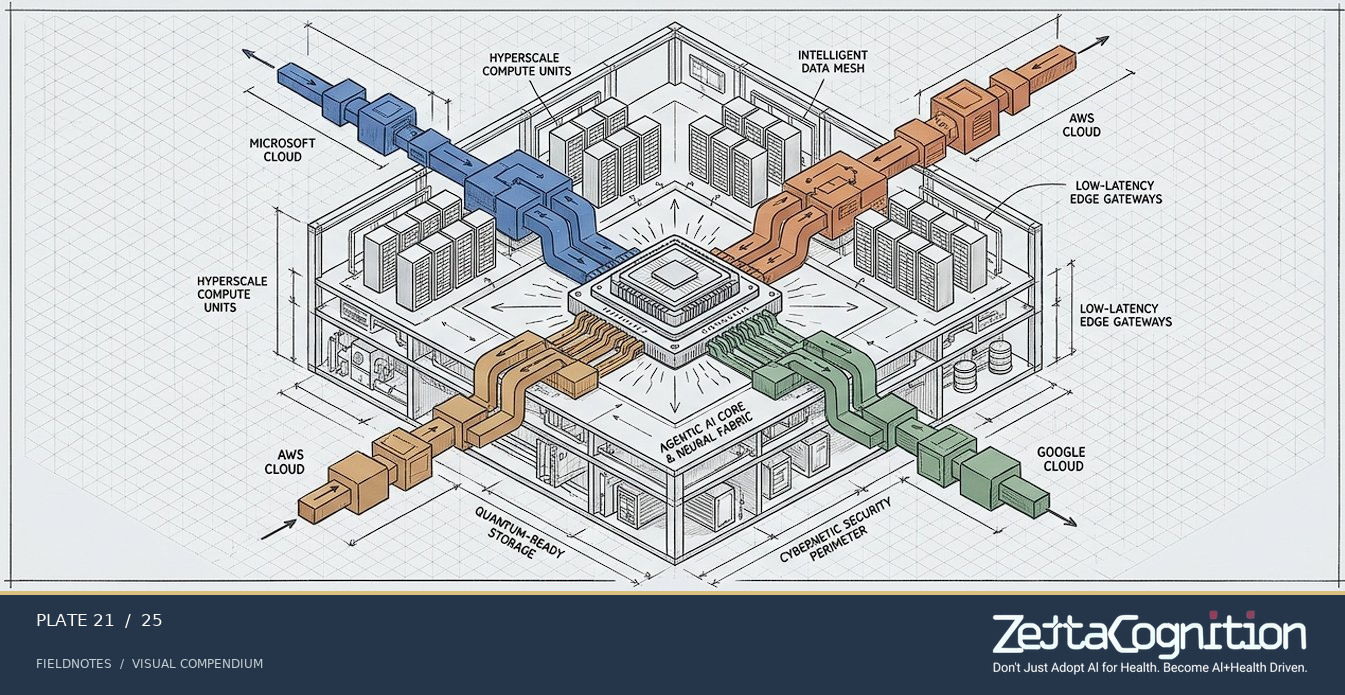
The architecture plate is a reminder that a platform decision ties together interfaces, data and dependencies. The difficult question is not how quickly to enter, but how responsibly to change course later.
A strategy that survives change
Teams can test an exit path before they need one. Documenting dependencies, exporting representative data and rehearsing a supplier change turn portability from a contract phrase into operational knowledge.
Price should include more than the monthly bill. Training, oversight, security work and the future cost of leaving all belong in the calculation. A cheap entry point may become an expensive dependency if no one owns that wider view.
The best choice is the platform that an organisation can govern under ordinary pressure, not simply admire in a trial. Flexibility is not indecision; it is the ability to keep deciding as technology and public expectations change.
Four questions belong in the room before the contract: data, control, cost and exit. If the last one has no answer, the first three may eventually belong to the vendor.
Questions to ask before choosing a cloud AI platform
- 1Data
Where does it live and who can see it?
- 2Control
Can we audit and switch off the models?
- 3Cost
What happens as usage grows?
- 4Exit
How hard is it to leave?
Plan for movement
A platform should make it possible to change models or suppliers without rebuilding every workflow. Clear interfaces, portable data and documented dependencies reduce the cost of changing course.
This is especially important where institutional records and sensitive information are involved. Location and retention rules must remain intelligible beyond a procurement presentation.
Govern the agent, not just the model
An autonomous workflow needs defined permissions, logs and stop conditions. Buying more capability without these boundaries transfers a governance problem into production.
The best cloud choice is not necessarily the loudest roadmap. It is the one an organisation can understand, operate and leave if its needs change.
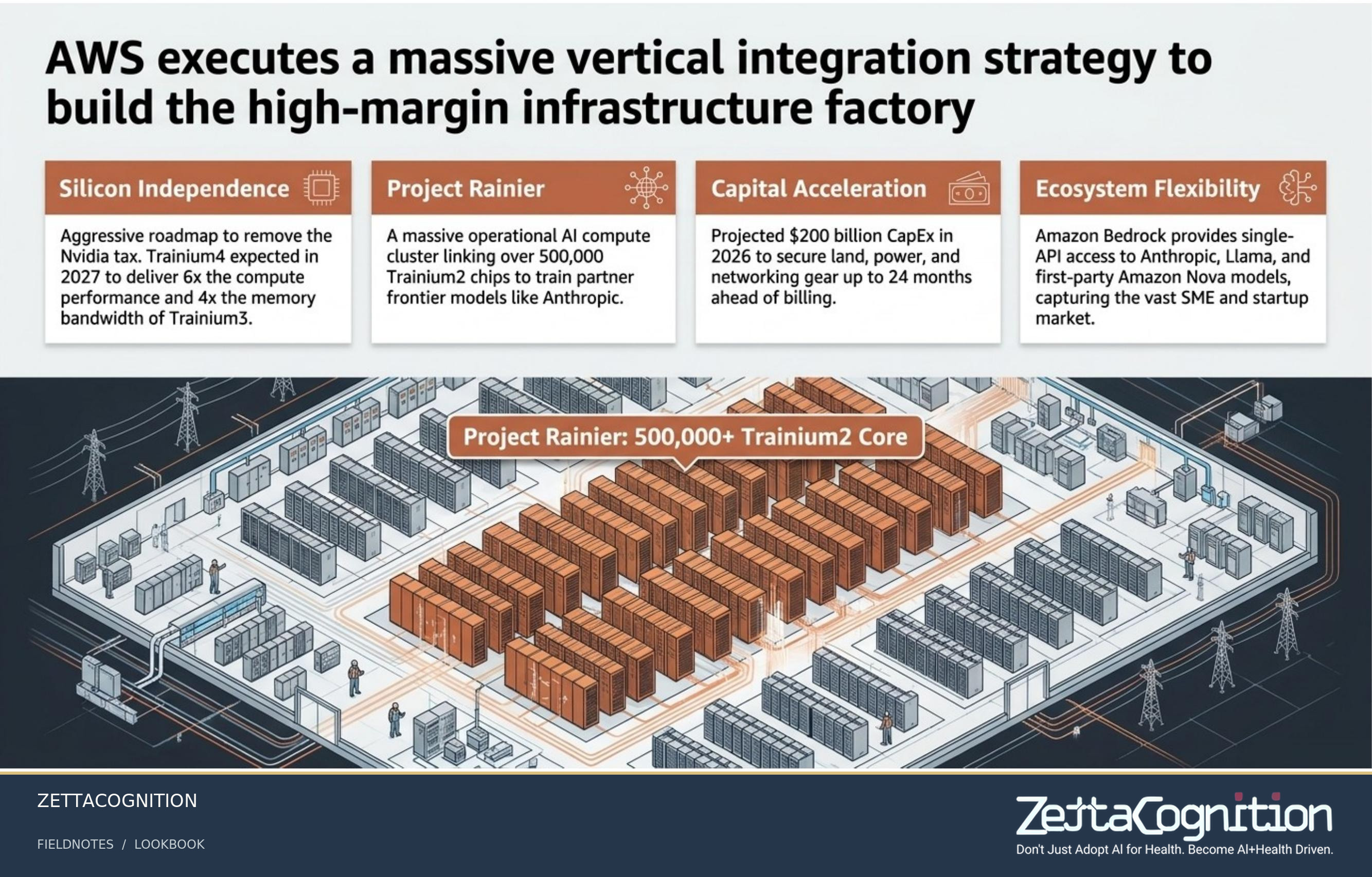
The provider-integration slide makes dependencies concrete: a cloud choice ties an organisation to interfaces and infrastructure beyond its own walls. Permissions, records and an exit path need to survive changes in provider.
The freedom to leave a platform is part of the freedom to govern what it does while you stay.
Cite this story
Sidhu, A. S. (2026). The cloud choice is a governance choice. Fieldnotes: AI Research Journal, 1(1). https://doi.org/10.5281/zenodo.23310394