The human work of aged-care AI
Technology can help a care team notice risks. It cannot be the relationship that makes care worth receiving.
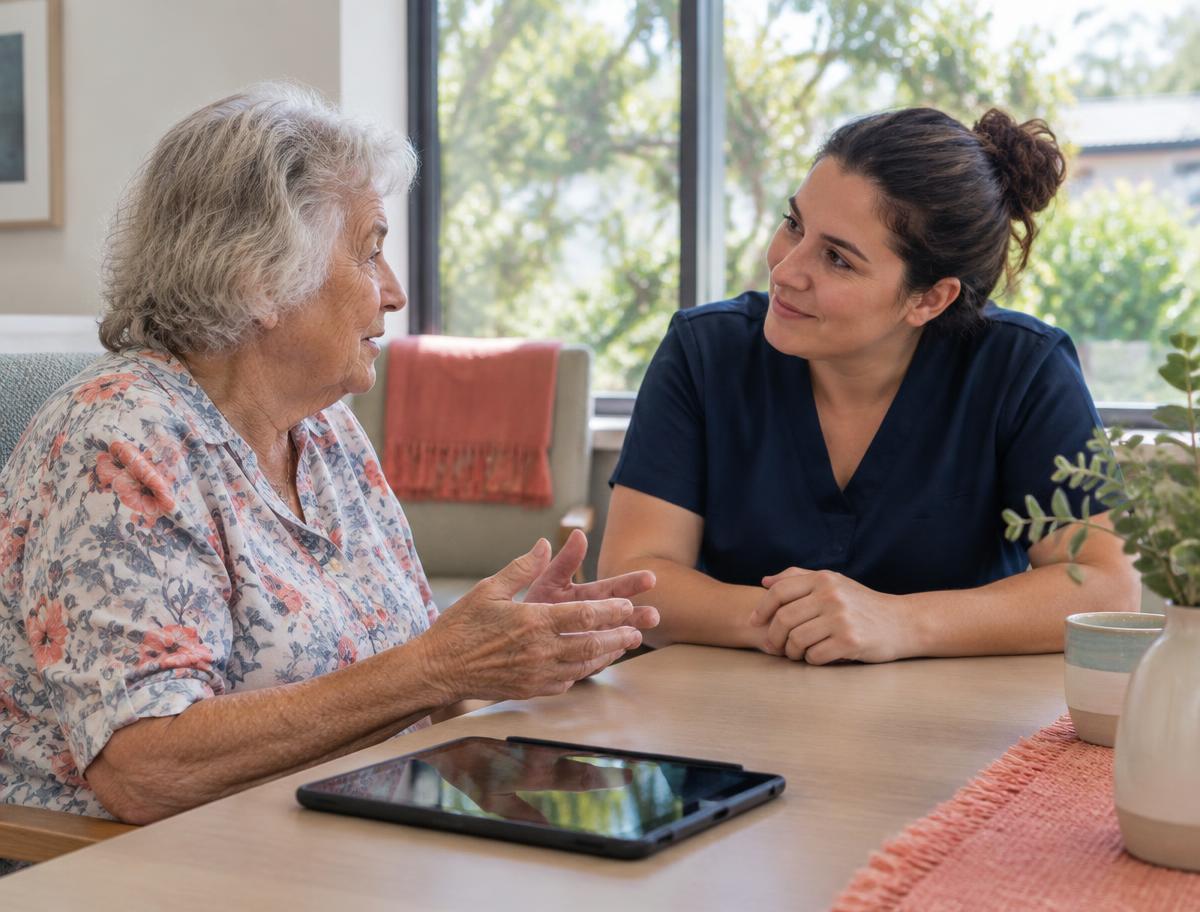
Aged care is full of invisible work: a conversation that calms someone, a small change noticed early, a family member reassured. These moments resist easy measurement.
An alert during a busy shift
Picture a care worker receiving an alert about a resident while preparing to help someone else. The screen can identify a pattern, but it cannot make time appear in the shift or tell the worker how to balance two immediate needs. The value of the alert depends on the working conditions around it.
A well-designed tool might help the team notice a change that would otherwise be missed. A poorly integrated one might add another interruption, duplicate records and leave staff feeling responsible for signals they have no power to address. Both outcomes can be described as AI adoption; only one resembles better care.
Workers know the difference between a resident’s usual routine and a meaningful change. Their experience should shape which signals matter, how they are presented and when a human decision can override them. Listening after deployment is too late to recover many of these design choices.
Families and residents also need a voice. A tool that promises reassurance can still feel intrusive if people do not know what is being observed, who sees the information and how long it remains available.
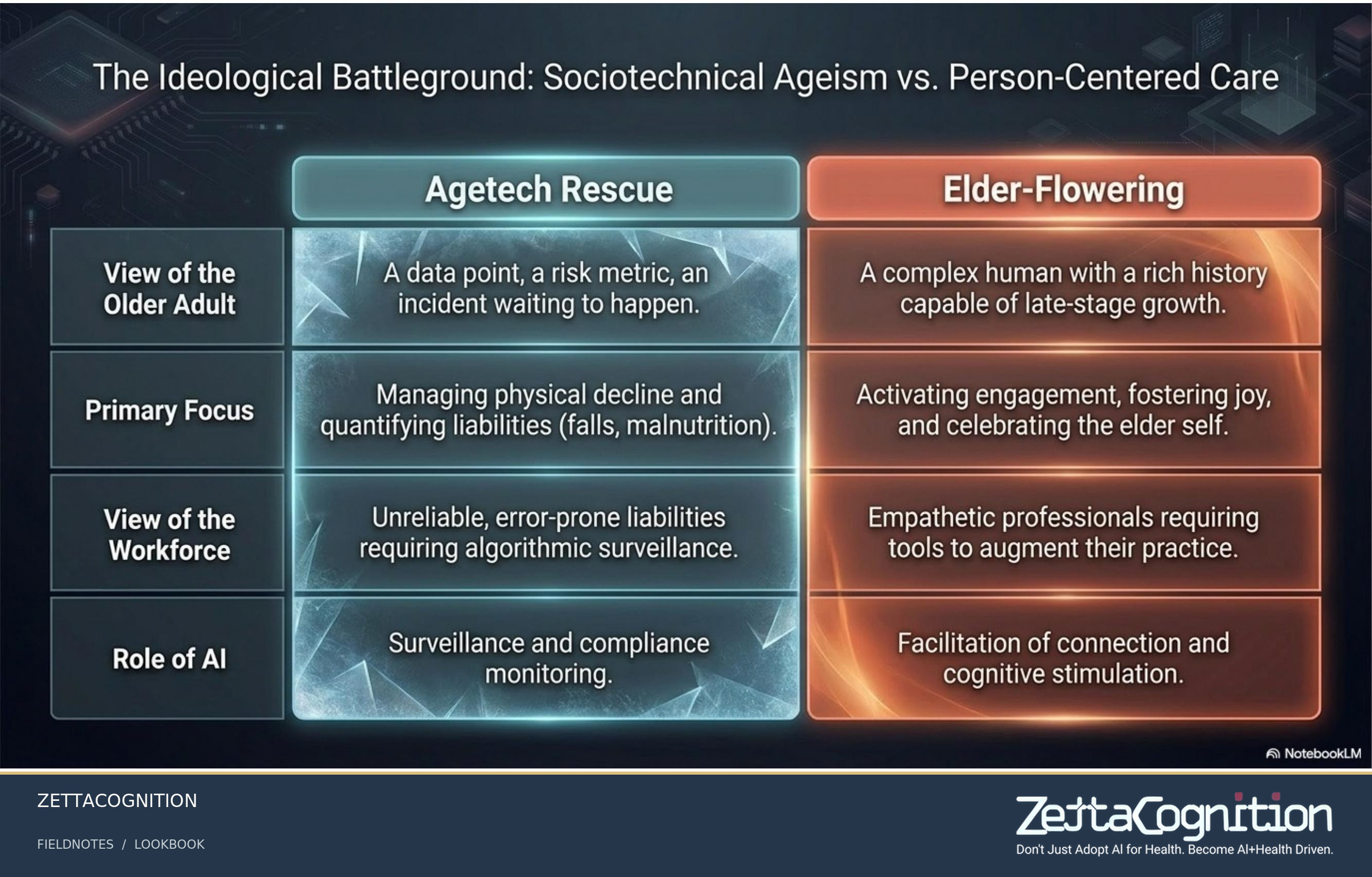
The person-centred care slide starts with relationships, not an alert. What happens after a system notices something depends on people, time and the authority to respond.
Measure what care gives back
Efficiency is an incomplete measure in a relational service. If documentation takes less time, what happens to the minutes saved? Do staff gain more opportunity for conversation and attentive care, or are they assigned another task? The answer determines whether technology changed the experience of a resident.
Implementation needs practical training, a route for reporting false alerts and enough staffing to respond when the system is right. Without these conditions, predictive insight can become a new form of pressure on an already stretched team.
AI should be judged by how it supports the person at the centre of the shift, not by how modern the facility looks. The human work of aged care is not a leftover task after automation; it is the purpose that gives the technology a reason to be there.
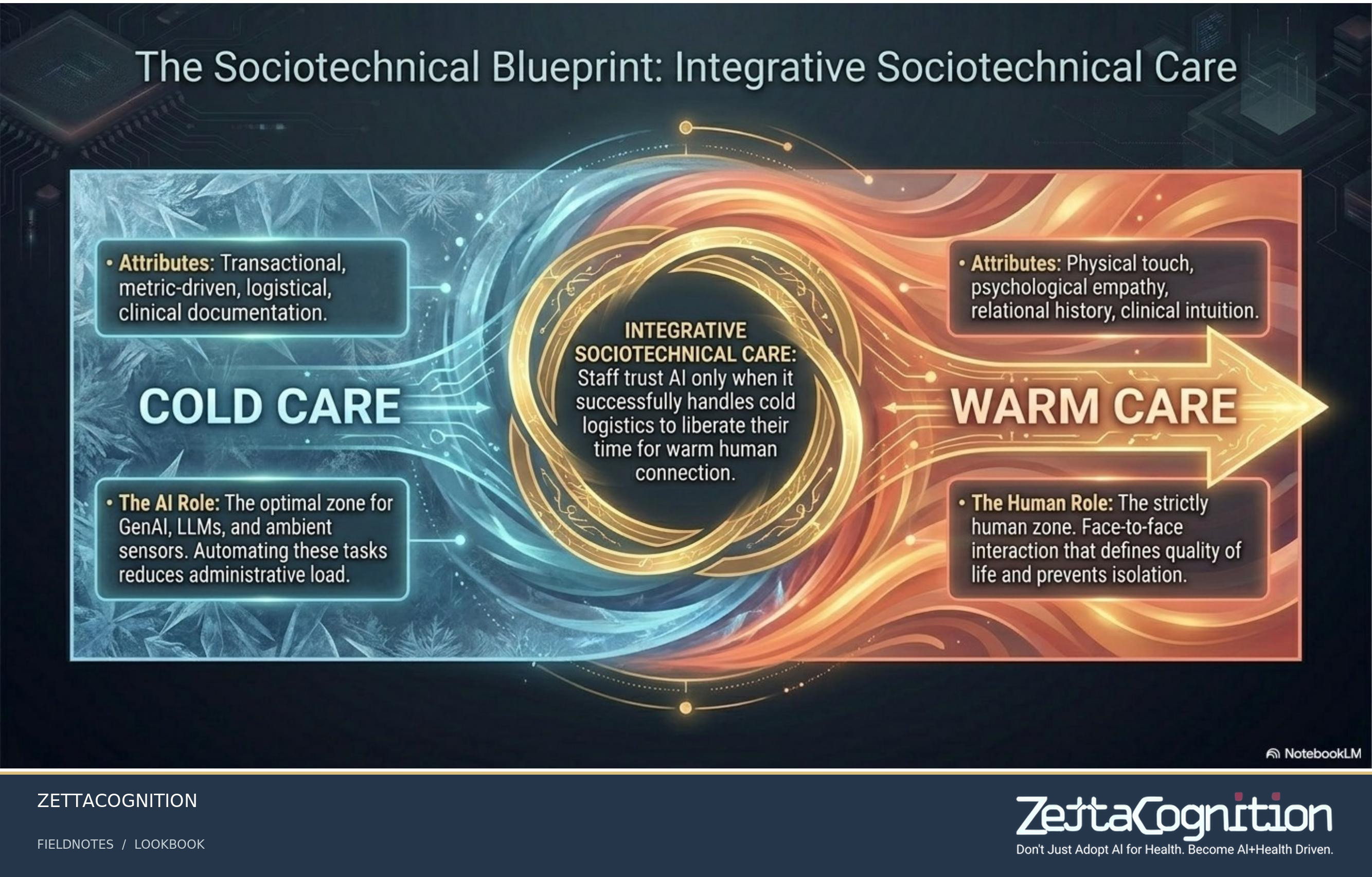
The division below is a design test, not a list of jobs to automate. Give machines repeatable support tasks; keep comfort, interpretation and a resident’s wishes with people.
What AI should and shouldn’t take on in care
Listen to workers first
A predictive alert is only useful if staff have the time, trust and authority to act on it. Added screens and poorly timed notifications can increase workload precisely where technology promises relief.
Care workers should help decide which problems need solving, how a tool fits a shift and when it should be ignored. Their experience is operational knowledge, not an obstacle to adoption.
Protect the person behind the metric
A resident is more than a fall-risk score. Systems should support dignity, consent and continuity of relationships, including when an algorithm suggests a different priority.
The best use of AI may be to return time to human care. That outcome needs to be measured as seriously as efficiency.
The next slide contrasts technology-led efficiency with warm care. If paperwork shrinks but no time returns to a resident, what exactly has improved?
Care is not the residue left when a system becomes efficient. Care is the reason to make the system better.
Cite this story
Sidhu, A. S. (2026). The human work of aged-care AI. Fieldnotes: AI Research Journal, 1(2). https://doi.org/10.5281/zenodo.23329475