The real cost of AI is not in the cloud
AI may feel weightless. Its infrastructure is anything but. Australia has a chance to build for the future without passing the bill to everyone else.
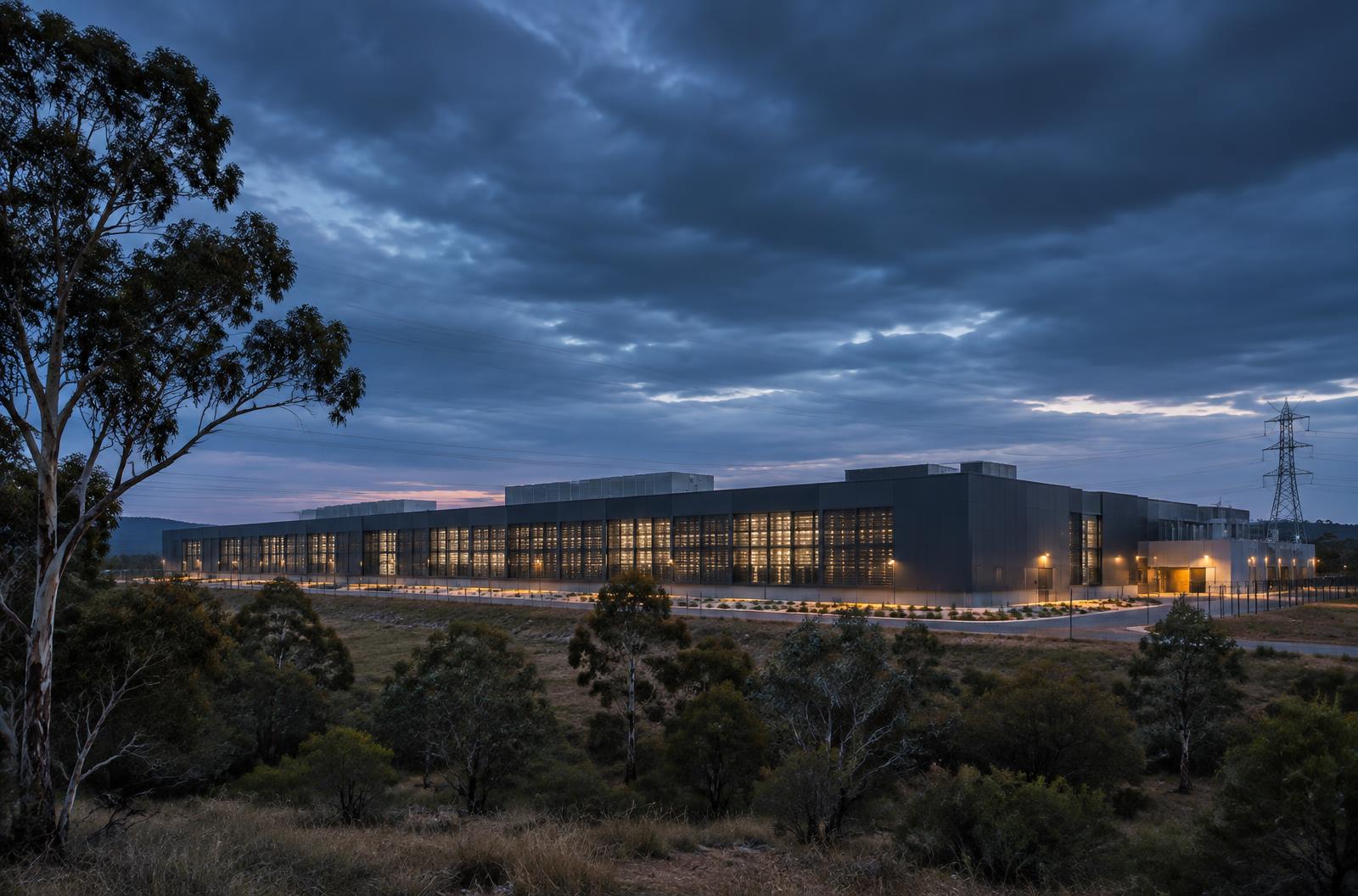
The language of artificial intelligence is remarkably immaterial. We talk about clouds, models and tokens. But behind every answer is a physical system drawing electricity, using water and occupying land.
The bill arrives somewhere
Imagine a town that hears a new data centre will bring investment and jobs. The announcement shows a clean row of servers and a promise of innovation. At the next community meeting, the questions are less abstract: which substation will serve it, where will the cooling water come from, and who pays if the network needs an upgrade?
A facility does not have to be unwelcome for these questions to matter. Its benefits may be real, particularly where local research and industry can access computing capacity. But a private business case and a public infrastructure case are not the same document. The costs of reinforcement, resilience and resource competition need to be visible together.
The same scrutiny should follow demand over time. A site approved for one level of activity may grow into another. Reporting on actual energy use and water withdrawal makes it possible to see whether the original bargain still holds, rather than treating permission as a once-and-for-all judgement.
This is why location matters as much as engineering. A cooling method that is sensible in one climate or catchment may be irresponsible in another. A region with plentiful renewable generation can still face constrained transmission at the hour a facility needs power most.
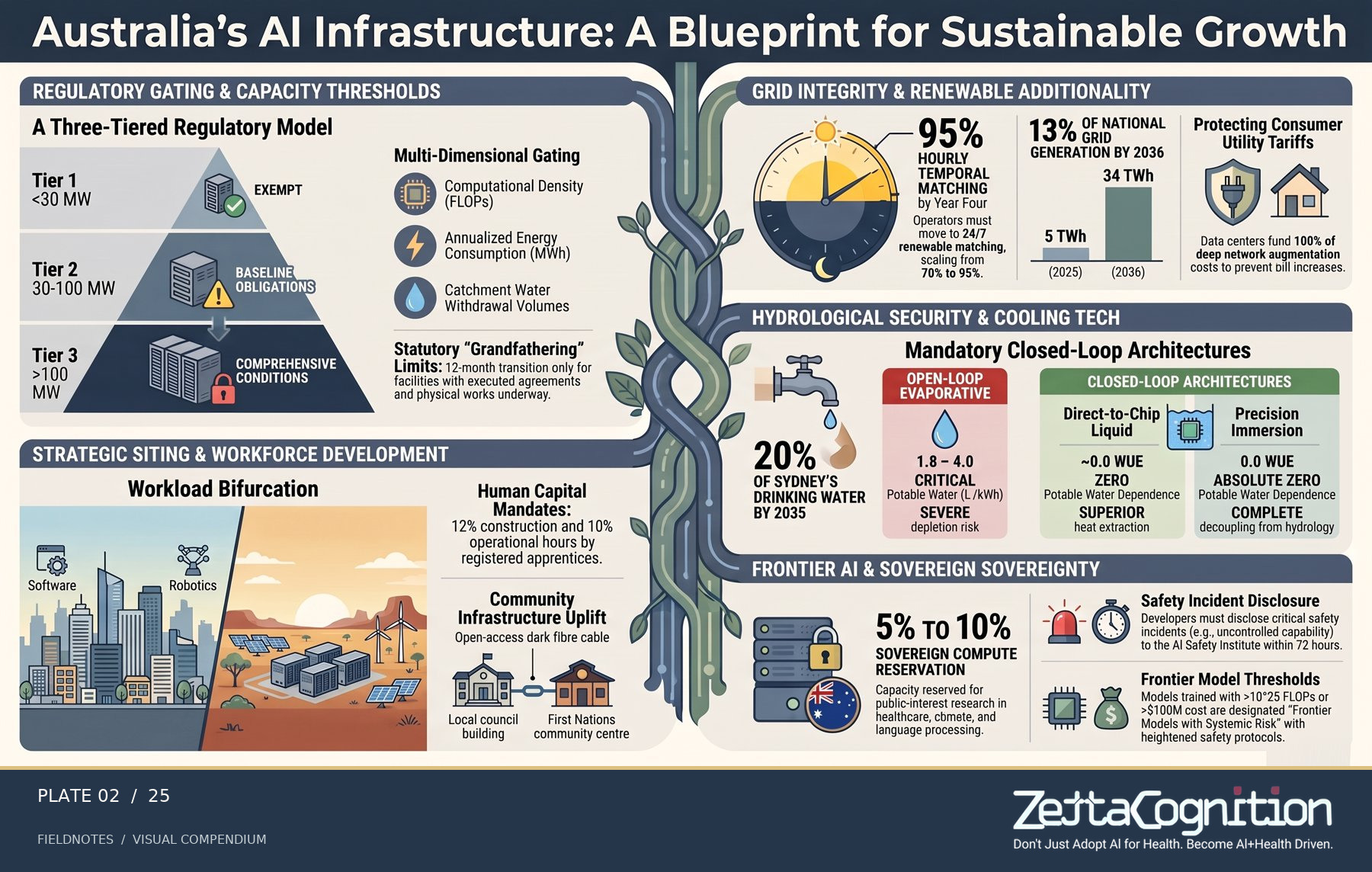
The infrastructure plate makes the invisible bill visible. Trace power, water and compute together, then ask where each burden lands when several facilities share a region.
What a fair bargain could look like
An honest approval process would put developers, utilities, researchers and affected communities around the same set of numbers. It would ask not only what the site consumes, but what new clean supply it helps bring online and how its operation changes during grid stress. It would account for neighbouring projects rather than resetting the clock at each property line.
Public benefit should also be more concrete than the word innovation. If new capacity is strategically important, universities, public-interest researchers and local enterprises need a plausible way to use it. Otherwise a community may carry the physical footprint of infrastructure whose rewards are largely exported.
None of this requires pretending AI can be weightless. It asks us to bring its physical costs into the same conversation as its ambitions. The future will still need computing; the choice is whether we build it with rules that make its presence sustainable and accountable.
At a glance, the cost has five layers. A business case that counts chips but leaves out the grid, the catchment, the workforce and the community has not yet counted the whole system.
The hidden layers of AI’s cost
- 1Compute
Chips and data centres.
- 2Energy
Power and cooling demand.
- 3Water
Cooling draws on local supply.
- 4People
Skills to build and run it.
- 5Community
Land, grid and local impact.
A physical question, not just a digital one
As demand for computing grows, the question is no longer simply where to build more data centres. It is how to build them without overwhelming the electricity grid, competing with local water needs or shifting infrastructure costs onto households.
These pressures are especially consequential when facilities cluster in the same region. A project may look manageable in isolation while its cumulative effect on a catchment or transmission network is anything but.
Measure what matters
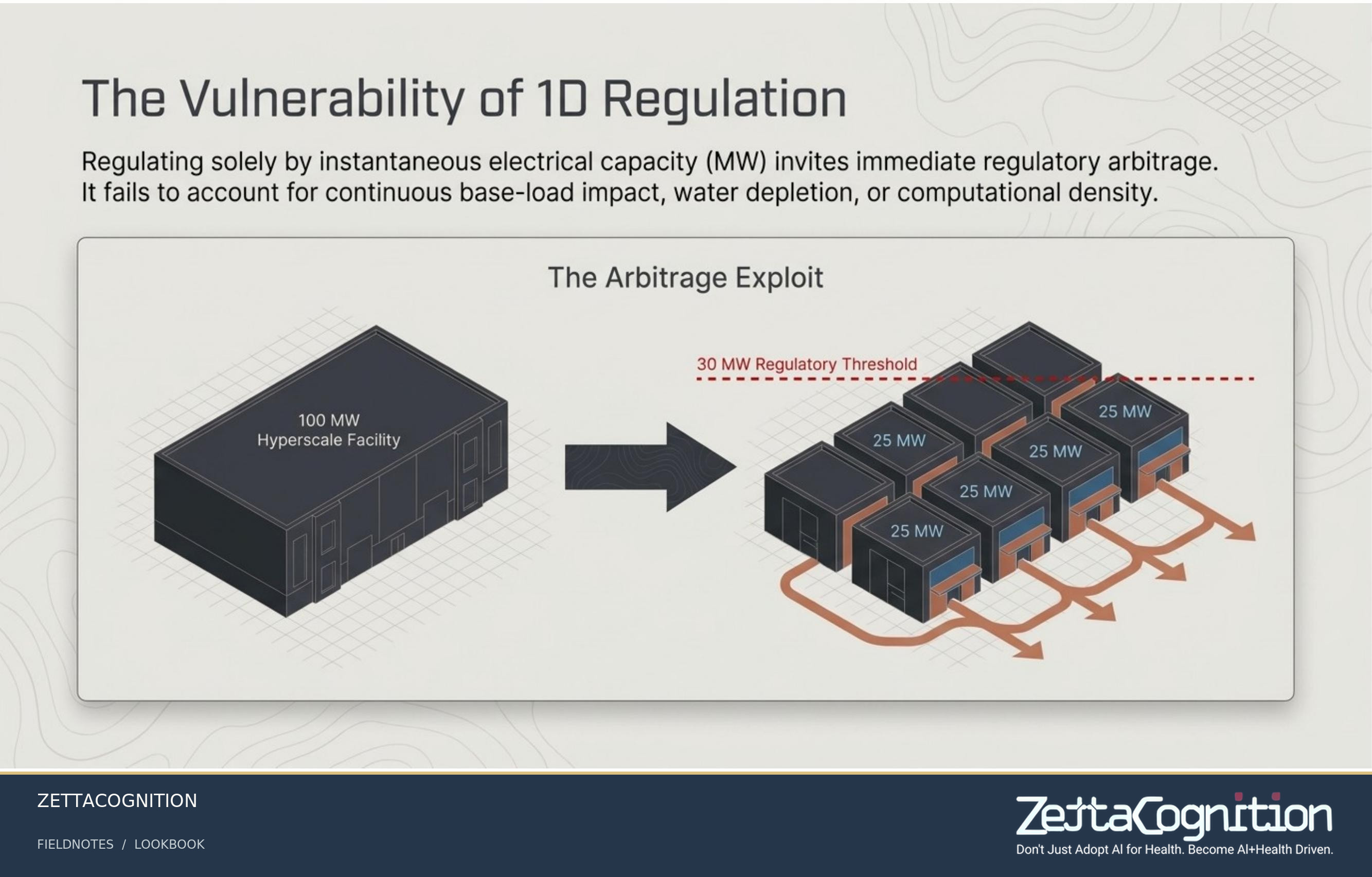
A threshold based only on a facility’s headline electrical capacity misses much of the picture. Effective oversight should also consider annual energy use, water withdrawal, computing intensity and the combined footprint of nearby facilities.
That broader view makes it harder to divide a large development into smaller pieces on paper while leaving the real-world burden unchanged. It also gives communities and decision-makers a more honest account of what is being approved.
Build the conditions for public value
Clean energy additionality, water-conscious cooling, transparent reporting and access to sovereign compute should be treated as foundations rather than afterthoughts. The objective is not to stop progress. It is to make sure progress can endure.
Australia can choose an AI infrastructure strategy that serves its research institutions, workers and communities—not one that merely accommodates an accelerating demand curve.
The standards slide returns to the choices behind the hardware. It is a proposal for evaluating trade-offs, not proof that any one site meets them.
AI does not float above the places that power it. The public deserves to see the whole bill before being asked to welcome the next data centre.
Cite this story
Sidhu, A. S. (2026). The real cost of AI is not in the cloud. Fieldnotes: AI Research Journal, 1(3). https://doi.org/10.5281/zenodo.23331172